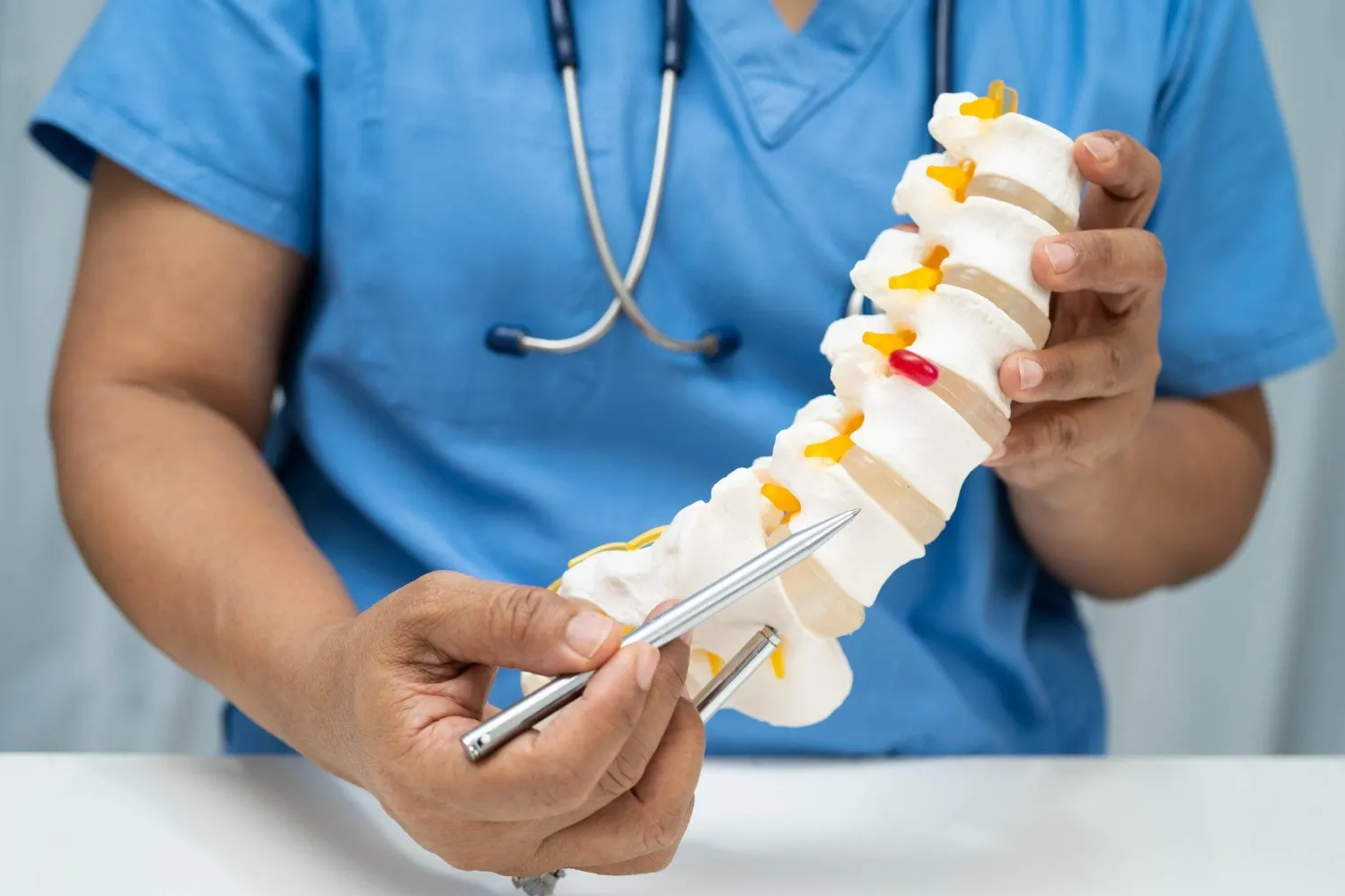
Being told that imaging shows a slipped disc can sound alarming. The term is commonly used for a spinal disc that has bulged, protruded, or herniated, but the scan finding alone does not determine how much pain someone will experience.
Some disc changes produce significant nerve symptoms, while others may cause little or no discomfort. For patients in Dombivli, Maharashtra, understanding this difference can prevent unnecessary fear and encourage more informed treatment decisions.
What Happens in a Slipped Disc
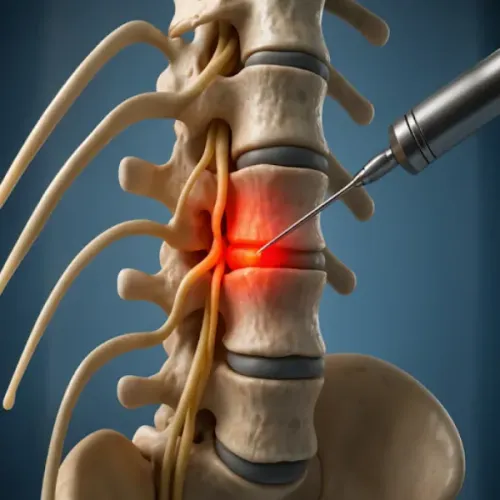
Spinal discs sit between vertebrae and help distribute load while allowing movement. Each disc contains an outer fibrous structure surrounding softer inner material.
Changes in the disc can sometimes cause it to bulge or allow inner material to move outward. When this affects nearby nerve structures, symptoms may extend beyond local back or neck pain.
Possible symptoms include:
- Lower back pain
- Neck pain
- Pain travelling into an arm or leg
- Tingling
- Numbness
- Burning sensations
- Muscle weakness
The location of the affected disc influences where symptoms may appear.
Why Slipped Disc Symptoms Vary
A scan showing a disc abnormality does not automatically prove that the disc is responsible for every symptom.
The clinical significance depends on factors such as:
- Location of the disc change
- Degree of nerve involvement
- Inflammation
- Neurological findings
- Patient activity
- Duration of symptoms
- Whether imaging findings match the pain pattern
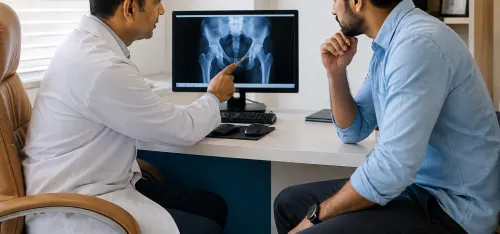
This is why imaging needs to be interpreted alongside a clinical examination.
Does a Slipped Disc Always Require Surgery
No. Many disc-related problems can initially be managed without open surgery, depending on the patient's neurological status, severity, diagnosis, and response to treatment.
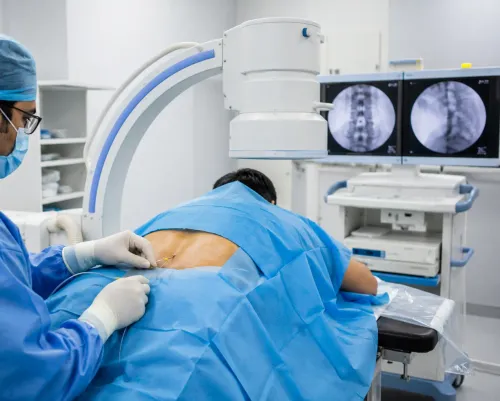
Conservative care may involve medication, rehabilitation, activity guidance, and monitoring. Selected patients with persistent symptoms may be considered for interventional pain procedures or minimally invasive techniques.
The appropriate pathway cannot be decided from the phrase “slipped disc” alone.
Which Symptoms Need Closer Attention
Pain is important, but changes in nerve function require particular attention.
Patients should be evaluated when they experience persistent radiating pain, increasing numbness, weakness, difficulty performing usual activities, or symptoms that are not improving as expected.
Severe neurological changes require more urgent assessment. Bladder or bowel dysfunction associated with back pain, saddle-area numbness, or rapidly progressing weakness should not be treated as routine back pain.
Looking Beyond the MRI Report
People sometimes become focused on words such as “bulge,” “protrusion,” or “herniation” in an MRI report. A more useful question is whether the reported finding matches the actual symptoms and examination.
Spine and Pain Management Centre assesses spine-related pain by considering the clinical presentation together with relevant investigations. This helps determine whether conservative management, targeted pain treatment, or another approach may be appropriate.
For someone in Dombivli, Maharashtra, receiving a slipped disc diagnosis should begin a process of understanding the condition rather than create an assumption that major surgery is inevitable. Treatment decisions are strongest when symptoms, neurological findings, functional limitations, and imaging are considered together.
Keywords