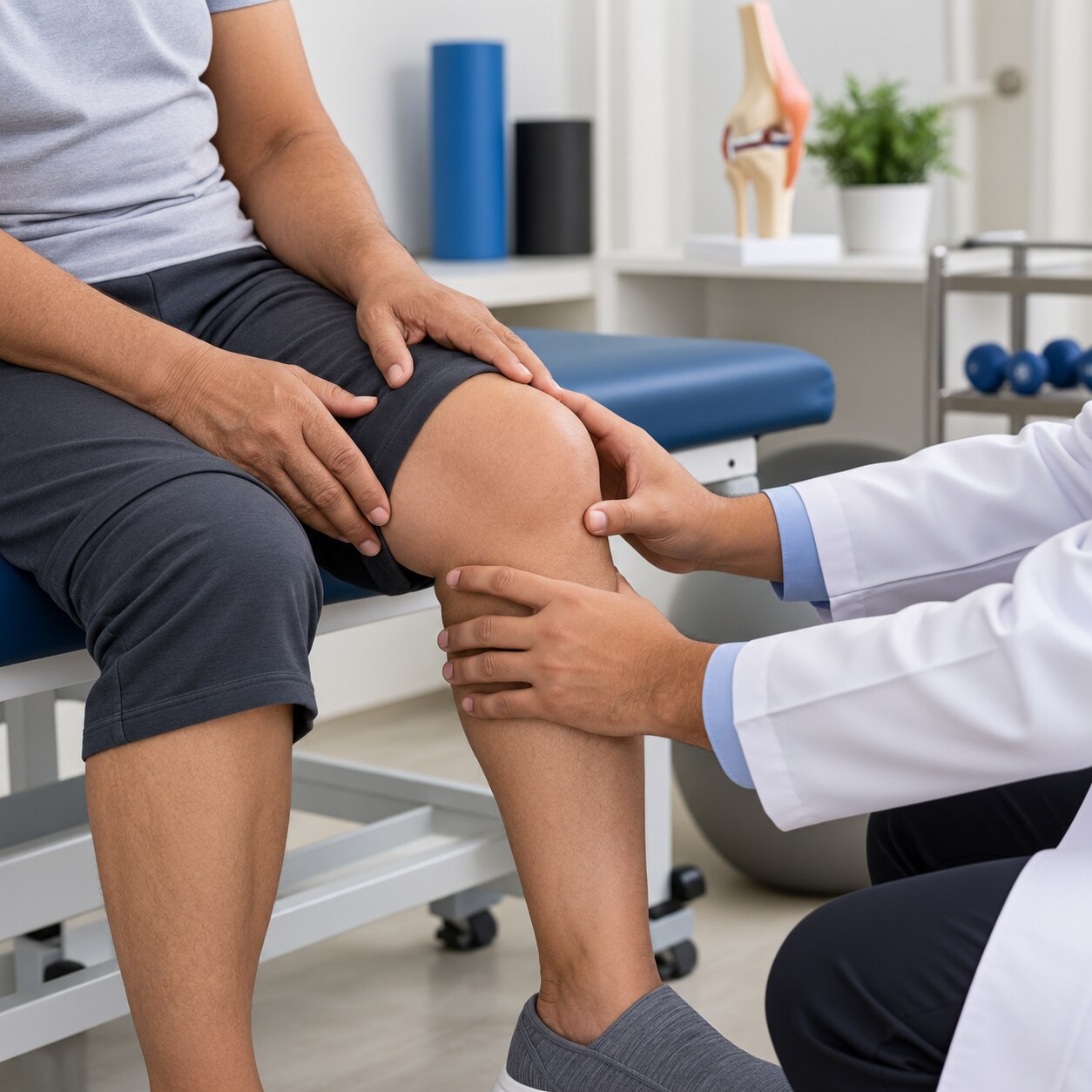
Knee osteoarthritis care works best as a monitored sequence rather than a single injection, exercise handout or painkiller. You will learn how to confirm the diagnosis, build a safe activity plan, compare treatments, track progress and recognise when specialist review or surgery referral is appropriate.
Key takeaways
- Use symptoms, examination and activity limits to establish a baseline.
- Progress strengthening and low-impact exercise instead of resting the knee.
- Compare medicine risks, benefits and suitability with a clinician.
- Review response before considering injections, procedures or replacement referral.
How do clinicians confirm knee osteoarthritis and set a starting point?
Knee osteoarthritis diagnosis usually starts clinically: activity-related knee pain in someone aged 45 or older, with morning stiffness lasting 30 minutes or less. A structured plan then combines assessment, symptom tracking, exercise progression, weight-management support, medication review and escalation review.
Your clinician will ask when pain began, what worsens it, walking tolerance, stairs, swelling, stiffness, locking, giving-way, previous injuries and treatment response. Examination checks your walking pattern, range of motion, tenderness, swelling, deformity, muscle strength and ligament stability.
Meniscal injury versus osteoarthritis pain often differs: a meniscal injury follows twisting or trauma and causes focal joint-line tenderness, catching or locking, while osteoarthritis more often produces gradual, load-related pain. Inflammatory arthritis causes prolonged morning stiffness and multiple swollen joints; gout causes sudden severe pain in a hot, red joint.
Infection can cause fever and a hot swollen knee, while hip disease can refer pain to the knee.
A standing weight-bearing X-ray helps when symptoms are atypical, another diagnosis is suspected, surgery is being planned or examination leaves uncertainty. X-ray severity does not reliably match pain: treatment follows function, symptoms, examination findings and your goals.
Seek prompt assessment for:
- Night pain, unexplained weight loss, fever, a hot swollen knee, new neurological symptoms, sudden inability to bear weight or a deformed joint.
- Calf swelling with breathlessness, which needs urgent medical attention.
How should you build exercise, weight and daily-activity changes into the plan?
Begin at a level you can repeat without a major next-day setback. A physiotherapist can tailor the programme, but home-based exercise works when technique and progression are consistent.
- Quadriceps strengthening: practise straight-leg raises or sit-to-stand, starting with a few controlled repetitions.
- Hip strengthening for knee pain: use side-lying leg raises or resistance-band steps to improve leg control.
- Knee range-of-motion work: gently bend and straighten the knee within comfort, without forcing a sharp pain.
- Low-impact aerobic exercise: choose walking, cycling or water exercise, starting with a short duration.
Increase only one variable at a time: repetitions, resistance, duration or frequency. A brief pain flare that settles within hours can occur when exercise begins. Reduce the load if pain remains substantially worse the next day; seek review for marked swelling, locking or giving-way.
Modify daily loading rather than stopping all activity. Use a handrail on stairs, push through the stronger leg when appropriate, and practise higher-seat sit-to-stands. Choose supportive, comfortable footwear; a walking aid fitted by a professional can reduce load. Limit prolonged kneeling, use a raised surface or kneeling pad, and alternate work tasks with planned breaks.
For knee osteoarthritis, weight loss can improve pain and function but does not cure the disease or guarantee cartilage restoration. Set sustainable goals: losing 5% of body weight is useful, while 10% may offer greater benefit when achievable, not a promise.
Keep a daily record of pain, swelling, walking time, stairs completed and flare triggers.
Which medicines and non-surgical treatments are worth comparing?
Compare options by the job they can do, their limits and your medical risks—not by promises of cartilage repair.
| Option | Likely role | Main limitation | Who should ask a clinician first |
|---|---|---|---|
| Physiotherapy | Strength, movement and function | Requires regular practice | People with severe pain, instability or uncertain diagnosis |
| Topical diclofenac knee | Local pain relief with less body exposure than tablets | Skin irritation; no broken skin or overuse | People with NSAID allergy or skin disease |
| Oral NSAIDs | Short-term pain and inflammation relief | Stomach, kidney, liver and heart risks | Anyone with kidney disease, ulcers, blood thinners, uncontrolled blood pressure, cardiovascular or liver disease, older age or pregnancy |
| Paracetamol | An option when NSAIDs are unsuitable | Often modest benefit; overdose damages the liver | People with liver disease, heavy alcohol use or combination medicines |
| Braces | Support or alignment assistance | Fit and benefit vary | People with deformity, poor circulation or skin problems |
| Walking aids | Reduce load and improve safety | Incorrect height or use can worsen strain | Anyone with falls, weakness or balance problems |
| Corticosteroid injection | Short-term flare relief | Temporary benefit and procedural risks | People with diabetes, infection risk or blood-thinner use |
| Hyaluronic-acid injection | Possible symptom relief | Inconsistent evidence, cost and injection risks | Anyone considering repeated injections |
| Radiofrequency procedures | Pain reduction after conservative treatment | Benefit, duration and access vary | People with uncertain diagnosis or untreated red flags |
Topical NSAIDs still follow the product label. Oral NSAID safety requires the lowest effective dose, shortest duration and no combining NSAIDs unless directed. Paracetamol’s formulation-, country- and health-dependent maximum daily amount applies; check cold remedies for duplicate ingredients.
Stop and seek care for black stools, vomiting blood, severe stomach pain, rash, facial swelling, breathing difficulty, chest pain, sudden reduced urine or suspected overdose. Opioids and glucosamine are not routine cartilage-restoring solutions.
When should injections, procedures or knee-replacement referral enter the discussion?
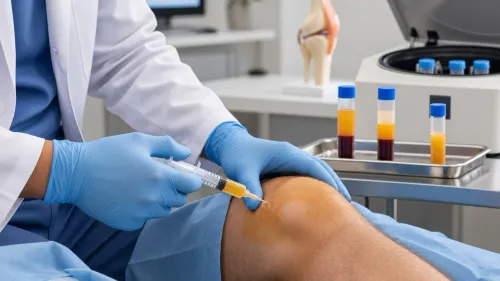
A corticosteroid knee injection can provide short-term relief, commonly about 2 to 10 weeks. Use it to settle a flare or create a window for exercise; it does not modify osteoarthritis or restore cartilage.
| Option | What it may offer | Main limitation |
|---|---|---|
| Corticosteroid injection | Short-term symptom relief | Relief fades; assess infection risk, diabetes-related glucose changes and blood-thinner use |
| Hyaluronic acid, PRP or Bone Marrow Concentrate | An additional treatment to discuss | Hyaluronic acid injection evidence is inconsistent; PRP preparation varies; Bone Marrow Concentrate osteoarthritis limits include uncertain benefit, cost and procedural risk |
| Radiofrequency knee procedure | Pain relief after diagnosis and conservative review | Not an automatic first-consultation treatment; benefit and duration vary |
| Knee replacement | Durable treatment for suitable end-stage disease | Larger recovery burden than injections or home treatment |
Discuss hyaluronic acid, PRP and Bone Marrow Concentrate carefully: preparation methods, costs and risks differ, benefits remain inconsistent or uncertain, and none guarantees cartilage regrowth. Before any injection, review infection, glucose control, blood-thinner use, allergies and other procedural risks.
A radiofrequency knee procedure belongs after the diagnosis is secure and exercise, medication and activity changes have been reviewed. Arthroscopic lavage or debridement is not treatment for osteoarthritis alone. AVN is different: it involves bone death from disrupted blood supply, so AVN treatment is not interchangeable with osteoarthritis treatment.
Refer for knee-replacement assessment when function remains limited after an adequate conservative trial, deformity progresses, severe X-ray disease matches symptoms, or quality of life becomes unacceptable. Compare ongoing exercise, appointments and monitoring with replacement’s larger recovery and rehabilitation demands.
Spine And Pain Management Centre in Kalyan can provide clinician-led assessment of these choices, not a reason to assume every patient needs a procedure.
Related service
Pain Treatment ₹700 Knee pain can affect mobility, daily activities, and overall quality of life. At Spine and Pain Management Centre in Kalyan, Dr. View service → |
How do you review progress and decide whether the plan still fits?
Set an osteoarthritis treatment review schedule for four to six weeks after starting or changing the plan. At the first visit, record baseline knee pain, walking duration, stair tolerance, swelling, range of motion, quadriceps strength and pain interference with sleep, work or daily tasks.
| Review point | What to check | Decision |
|---|---|---|
| Baseline | Goals, symptom record, medicines and risks | Set measurable targets |
| Week 4–6 | Technique, adherence, side effects and outcome measures | Continue, modify or escalate |
| After a change | Benefit, restrictions and new risks | Keep only if benefit justifies burden |
Before changing treatment, watch the exercises being performed, confirm how often they were completed and review medication effects, interactions and risks. Then repeat the knee pain outcome measures. A useful plan has dates, measurable goals and an escalation rule, not indefinite self-management.
The plan is a poor fit when the diagnosis remains uncertain, another condition drives symptoms, red flags appear, you cannot maintain the required exercise or follow-up, or a procedure’s benefit is unclear compared with its risk and total cost.
Bring prior imaging, a medication and supplement list, medical conditions, symptom timeline, activity goals and daily symptom record.
Use these questions before knee injection or another procedure:
- What is the exact diagnosis and expected benefit?
- How strong is the evidence, and what alternatives exist?
- How many visits, recovery restrictions and total costs apply?
- What happens if it fails?
Clarify pain relief versus cartilage repair: symptom improvement does not prove structural repair or cartilage regrowth.
Frequently asked questions
How do clinicians confirm knee osteoarthritis and set a starting point?
They assess activity-related pain, morning stiffness, knee movement, tenderness, swelling and function. In adults aged 45 or older with typical symptoms and stiffness lasting 30 minutes or less, diagnosis is often clinical. X-rays help when symptoms are unusual, severe or not improving. Record pain, walking ability, stairs, sleep and daily activities as baseline measures.
How should exercise, weight and daily-activity changes fit the plan?
Use progressive strengthening for the thigh, hip and core alongside low-impact aerobic activity such as walking, cycling or swimming. Start at a manageable level and increase duration or resistance gradually. If you carry excess weight, combine nutrition support with activity rather than relying on rest. Pace demanding tasks, use supportive footwear and break long periods of standing into shorter blocks.
Which medicines and non-surgical treatments are worth comparing?
Compare topical non-steroidal anti-inflammatory drugs, oral anti-inflammatory medicines, paracetamol and non-drug options according to pain severity, other conditions and medicine risks. Topical treatment can reduce whole-body exposure. Ask about stomach, kidney, heart, blood-pressure and blood-thinner risks before taking an oral anti-inflammatory. Physiotherapy, education and walking aids can complement medicine.
When should injections, procedures or knee-replacement referral enter the discussion?
Discuss an injection when pain remains limiting despite a structured exercise and medicine plan, while weighing temporary benefit and procedure risks. Consider specialist or knee-replacement referral when persistent pain and loss of function substantially affect work, sleep or basic activities despite non-surgical care. Referral depends on symptoms and function, not an X-ray alone.
How do you review progress and decide whether the plan still fits?
Review pain, walking distance, stairs, sleep, medicine use, exercise tolerance and unwanted effects after an agreed interval. Continue treatments that improve function with acceptable risks, adjust activities or medicines when progress stalls, and investigate another diagnosis when symptoms change, swelling persists or the examination no longer matches osteoarthritis.