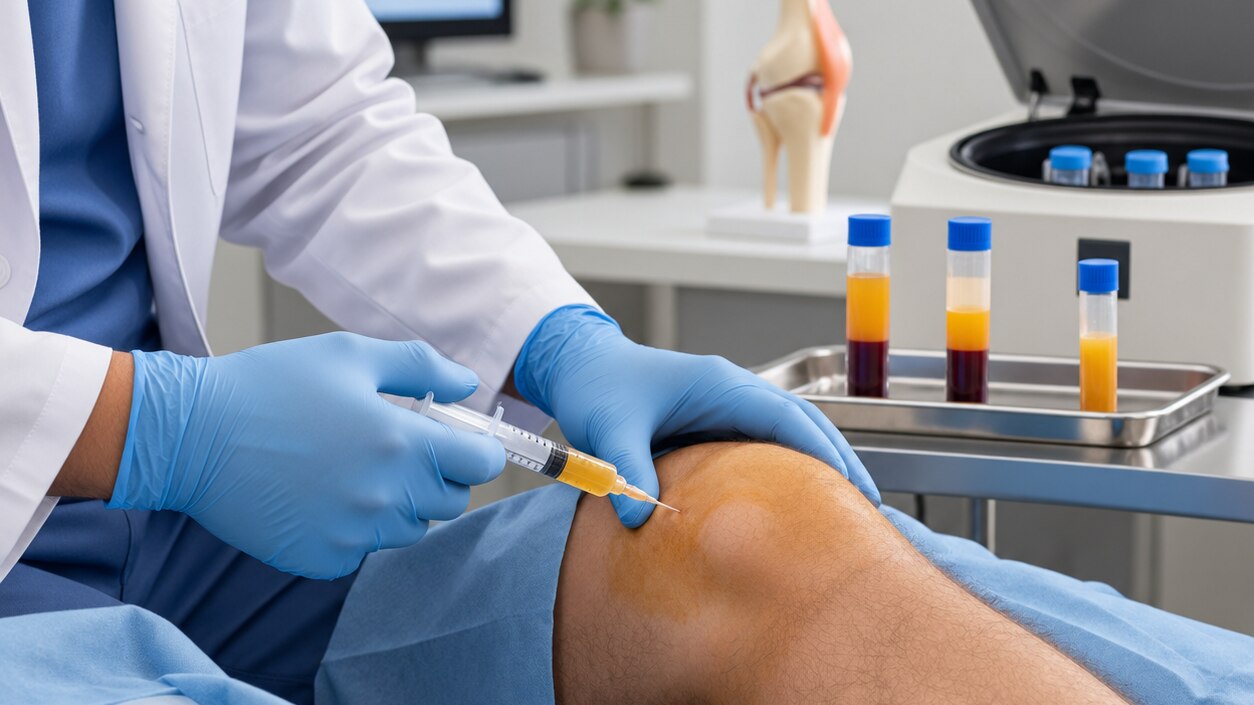
Bone marrow concentrate is not a purified stem-cell injection: it is a variable mixture collected from your marrow and processed before placement at a joint, tendon, ligament, spine or bone site. By the end, you will know what the product contains, how it is made, what the research actually supports, and which questions help determine whether it fits your diagnosis.
Key takeaways
- Bone marrow concentrate usually comes from the posterior iliac crest.
- Ask how the sample was processed and which cells or substances it contains.
- Compare BMC evidence for your specific condition, not musculoskeletal pain generally.
- Discuss realistic benefits, risks, alternatives and recovery before choosing treatment.
What bone marrow concentrate is—and where it comes from
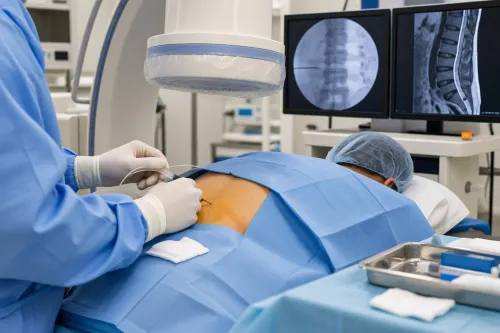
Whole bone marrow is the soft tissue inside certain bones that produces blood cells. For BMC or BMAC, clinicians usually draw it from the posterior iliac crest, the back edge of the pelvic bone, using a needle after local anaesthetic. The withdrawn material is called an aspirate; it is not yet bone marrow concentrate.
The aspirated sample contains a mixture of marrow components:
- Mesenchymal stromal cells, present in a very small fraction
- Haematopoietic cells that form blood cells
- Platelets and leukocytes
- Red blood cells or red-cell remnants
- Plasma and soluble signalling molecules, including growth factors
To make bone marrow concentrate, the clinic transfers the aspirate into a sterile processing system and uses centrifugation to separate components by density. The selected cell-containing layer is removed, with some systems reducing plasma, red cells, or leukocytes before the remaining suspension is prepared for injection.
A closed processing system limits exposure to the environment during this handling.
Bone marrow concentrate is commonly abbreviated as BMC. BMAC usually means bone marrow aspirate concentrate, and clinics often use the terms interchangeably. Neither name guarantees a fixed cell count or composition. The aspiration volume, processing device, number of centrifuge cycles, and removal of red cells or leukocytes all change the final product.
Calling it “stem-cell-rich” does not make it a purified stem-cell treatment; mesenchymal stromal cells remain only a small part of the mixture.
How the sample is collected, processed and described
After bone marrow aspiration, the sample is not ready for injection. A clinician usually draws marrow from the posterior iliac crest with a needle, using multiple small pulls to limit dilution with blood. The procedure can cause pain, bleeding, infection or a vasovagal reaction. Processing then separates and concentrates selected components while preserving sterility.
- The aspirate enters a sterile container with an anticoagulant to prevent clotting.
- A centrifuge separates layers by density. The operator collects a marrow-derived fraction containing nucleated cells, mesenchymal stromal cells, hematopoietic cells, platelets, leukocytes and red-cell remnants.
- Some systems remove part of the red-cell or leukocyte fraction; others retain it. Filtering and one or more centrifugation cycles also change the final product.
- A closed processing system keeps the sample inside connected sterile disposables, reducing handling and exposure before the concentrate is placed into a syringe for image-guided injection.
| Product detail | What changes | Why it matters |
|---|---|---|
| Aspiration site and pull volume | Dilution, cell yield and blood content | Two samples labelled BMAC can have different cell concentrations |
| Anticoagulant and centrifugation protocol | Recovery of cells, platelets and plasma | The final mixture is not comparable without the method |
| Red-cell and leukocyte removal | Colour and inflammatory-cell profile | Retained components can alter the injected product |
| Laboratory reporting | Total nucleated cells, viable cells and mesenchymal-stromal-cell counts | “Stem-cell-rich” or fold-concentration claims do not show actual cell numbers |
| Processing and sterility controls | Handling time and contamination risk | A sterile, documented pathway matters before injection |
What the evidence shows for different musculoskeletal conditions
The evidence supports possible symptom improvement, not predictable tissue regrowth. Human studies mainly measure pain, function, imaging, or later treatment; they have not established reliable restoration of normal cartilage or reversal of spinal degeneration.
- Knee osteoarthritis has the largest clinical literature, but confidence remains limited. Studies report pain and function gains, yet small samples, short follow-up, varied preparations, and weak placebo-controlled comparisons prevent a consistent advantage over exercise rehabilitation or other injections.
- Cartilage defects have been studied mainly in small series, often alongside scaffolds or surgery. Those designs cannot show whether BMC itself restored the cartilage surface.
- Tendon injuries have sparse, varied evidence, with mostly uncontrolled studies. BMC is not an established replacement for graded loading, repair, or reconstruction when those treatments are indicated.
- Ligament injuries have similarly limited evidence. No dependable proof shows that an injection restores mechanical stability or matches reconstruction for an unstable tear.
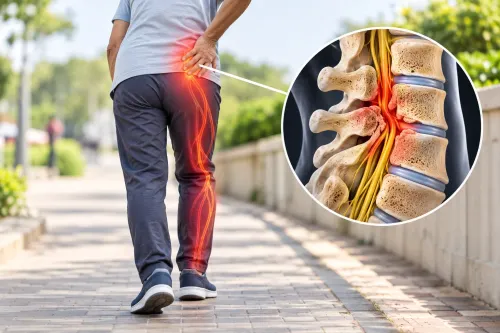
- Spine studies are smaller and less definitive than knee studies. In degenerative disc disease and discogenic low-back pain, improved pain scores do not prove disc repair or correct identification of the pain source.
- Osteonecrosis evidence remains uncertain. Small studies, often combining BMC with core decompression, suggest possible delay of collapse in early disease, but no predictable joint salvage is established.
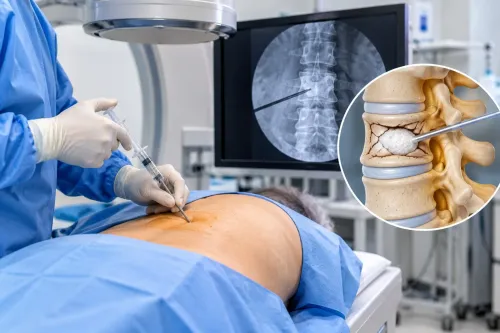
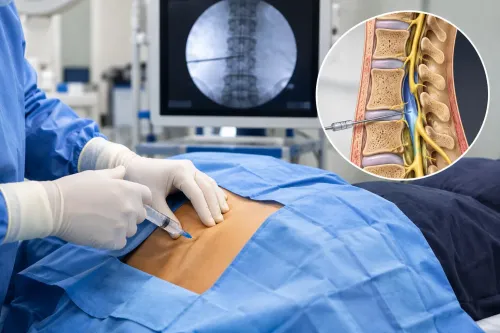
Image guidance improves placement and can reduce avoidable procedural risk; it does not prove effectiveness. In the United States, the FDA has not approved BMAC to treat osteoarthritis, disc disease, back pain, or other orthopedic conditions. Regulatory status and clinical efficacy are separate questions.
What BMC can realistically do, and what risks it carries
A better pain score is not proof that BMC regenerated tissue. Human studies have measured pain, function, imaging, and later treatment; they have not established predictable restoration of normal cartilage, reversal of degenerative disc disease, or repair of a spinal joint.
Interpret a proposed result in this order:
- Separate symptom relief from structural repair. Pain can fluctuate naturally or improve through anti-inflammatory and paracrine effects, rehabilitation, placebo effects, or treatment of the wrongfully assumed pain source. Improvement does not show that injected cells survived, engrafted, or produced cartilage regeneration.
- Match the claim to the condition. Evidence for degenerative disc disease and other spinal conditions remains smaller and less definitive than evidence for some knee applications. BMC is not a guaranteed solution for a worn disc, cartilage defect, tendon, ligament, or osteonecrosis.
- Ask what risks apply to both stages. Marrow aspiration from the posterior iliac crest can cause pain, bleeding or hematoma, infection, vasovagal reactions, and injury to nearby structures. Injection adds risks of infection, bleeding, worsening pain, and neural or other tissue injury.
- Check the regulatory claim separately from the medical claim. In the United States, the FDA has not approved BMC for osteoarthritis, degenerative disc disease, back pain, or other orthopedic conditions. “Autologous” or “prepared during the procedure” does not equal approval; minimally manipulated and expanded cell products follow different regulatory categories, and compliance does not prove effectiveness.
How to decide whether BMC is a sensible option for you
A sensible BMC decision begins with the pain generator, not an MRI label. Confirm that your examination, symptom pattern and imaging findings point to the same structure, then consider symptom duration and prior treatment failure. BMC is a poor substitute for treating infection, fracture, tumour, major instability, or nerve compression requiring decompression.
Check these patient-selection issues before agreeing:
- Smoking, diabetes, obesity, anemia, blood-thinning medication and marrow quality can affect safety or results.
- Ask whether the target is a knee, tendon, joint, disc or another structure, and what finding proves it causes your symptoms.
- Ask what outcome is realistic: pain relief, better function, delayed surgery or an imaging change—not reliably regrown cartilage or a repaired disc.
- Request the proposed BMC product details, comparator treatment, follow-up period and adverse-event data. “Stem-cell-rich” and a fold-concentration claim are not enough.
- At Spine And Pain Management Centre, ask the clinician to explain why BMC fits your diagnosis better than the alternatives, not simply whether the injection can be performed accurately.
| Option | Questions to answer | When it applies |
|---|---|---|
| BMC | What evidence supports this target and product? | A confirmed pain generator persists after appropriate conservative care |
| Structured nonoperative care | Have exercise, weight management, medication or physical therapy been completed adequately? | Symptoms are manageable and no urgent structural problem exists |
| Surgery or another procedure | Is there nerve compression, instability, fracture or advanced joint damage? | The structure needs mechanical correction that a biologic injection cannot provide |
Related service
Pain Treatment Bone Marrow Concentrate Treatment ₹700 Dr Prakash Deshmukh at Spine and Pain Management Centre in Kalyan offers advanced Bone Marrow Concentrate (BMC) Treatment, a regenerative therapy... View service → |
Frequently asked questions
What is bone marrow concentrate, and where does it come from?
Bone marrow concentrate is processed bone marrow aspirate, usually collected from the posterior iliac crest at the back of the pelvic bone. The aspirate is the withdrawn material before concentration.
How is a bone marrow concentrate sample collected and processed?
A clinician uses local anaesthetic and a needle to draw marrow aspirate from the posterior iliac crest. The sample is then processed to concentrate selected components, so ask which method was used and how the final product is described.
What does the evidence show for different musculoskeletal conditions?
Evidence varies by condition, study design and treatment protocol. Evaluate results for your specific diagnosis rather than assuming findings for one joint or tendon apply to another.
What can bone marrow concentrate realistically do, and what risks does it carry?
BMC may support symptom improvement in selected conditions, but it is not a guaranteed repair or cure. Discuss injection-site pain, bleeding, infection, nerve or tissue injury, and the possibility of no meaningful benefit.
How can you decide whether bone marrow concentrate is sensible for you?
Confirm the diagnosis, review condition-specific evidence, compare standard and less invasive alternatives, and ask about the processing method, expected outcome, recovery and risks before deciding.