
Pain that travels from the lower back or buttock down the leg is often described as sciatica. While the term is widely used, it does not simply mean any type of back or leg pain. Sciatica generally refers to symptoms associated with irritation or compression affecting nerve roots that contribute to the sciatic nerve.
For patients in Kalyan, Maharashtra, understanding this distinction is useful because the treatment approach depends on what is actually producing the nerve symptoms.
How Sciatica Symptoms Commonly Develop
Sciatic symptoms can vary significantly between individuals. Some people mainly experience pain, while others notice tingling, numbness, burning sensations, or weakness.
Typical symptoms may include:
- Pain beginning in the lower back or buttock
- Discomfort travelling down one leg
- Tingling or pins-and-needles sensations
- Numbness in part of the leg or foot
- Burning or electric-like pain
- Symptoms aggravated by sitting
- Difficulty performing certain movements
The exact distribution of symptoms can provide clues about which nerve structures may be involved.
Why Sciatica Is a Symptom Pattern
Sciatica itself does not identify the underlying spinal condition.
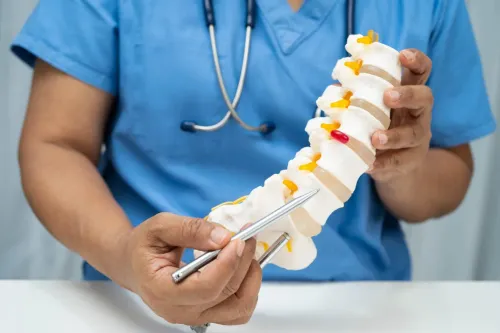
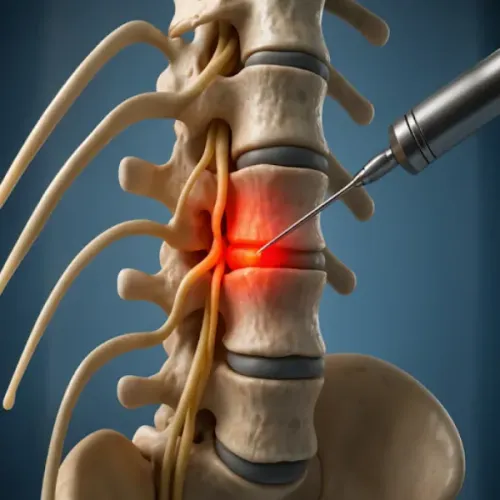
A slipped or herniated disc is one possible cause because displaced disc material can irritate nearby nerve roots. Other spinal changes can also reduce the space available around nerves.
This is why two patients who both describe “sciatica” may need different treatment plans.
Clinical assessment typically considers the history of symptoms, neurological findings, movement patterns, and imaging when clinically indicated.
What Usually Happens During Early Sciatica Care
Many patients assume that nerve pain automatically means surgery. That is not necessarily the case.
Depending on the diagnosis and severity, initial management may involve:
- Appropriate activity modification
- Guided exercises or rehabilitation
- Medication where suitable
- Posture and movement advice
- Monitoring neurological symptoms
Complete bed rest for prolonged periods is generally not a useful default strategy for uncomplicated mechanical back problems. Movement recommendations, however, need to reflect the individual's condition.
When Persistent Sciatica May Need Further Assessment
Pain intensity is not the only consideration. The duration of symptoms and the presence of neurological changes matter as well.
Medical assessment becomes particularly important when pain remains severe, repeatedly returns, or significantly limits walking, working, sleeping, or daily activities.
Progressive weakness deserves timely evaluation.
Changes in bladder or bowel control, numbness around the saddle region, or rapidly progressing neurological symptoms require urgent medical attention because they can indicate significant nerve compression.
Why Identifying the Source Matters
Treating only the painful area can miss the reason symptoms are travelling into the leg.
For example, massaging the calf may offer temporary comfort when pain is felt there, but it does not address a nerve problem originating in the lumbar spine.
At Spine and Pain Management Centre, assessment of radiating pain can help establish whether symptoms fit a spinal nerve pattern and what management options may be appropriate.
For patients in Kalyan, Maharashtra, understanding sciatica as a nerve-related symptom pattern is an important starting point. The key question is not simply how to stop the leg pain temporarily, but why the nerve is irritated and whether the condition is improving, stable, or progressing.
Keywords