
Shoulder pain becomes more informative when you track exactly how movement changes: whether the arm stops because it hurts, feels stiff, lacks strength or becomes unreliable. By examining these patterns, adapting aggravating tasks and recognising warning signs, you can choose between self-management, physiotherapy and a clinical assessment with better judgment.
Key takeaways
- Pain-limited movement can improve with slower, supported arm lifting.
- Painful catching, stiffness and weakness suggest different shoulder problems.
- Track sleep, dressing, reaching and lifting before your appointment.
- Seek assessment sooner if pain follows injury or rapidly worsens.
What worsening shoulder pain does to movement
Pain-limited movement usually stops because the shoulder hurts, not because the muscles have lost all power. During pain raising the arm, you may move farther when you go slowly, support the elbow, or rest briefly; the limit changes with pain intensity.
Stiffness is different: reduced shoulder range of motion remains restricted even when you relax, and another person cannot gently move the arm much farther. Adhesive capsulitis often restricts outward rotation first, followed by lifting the arm and reaching inward.
True weakness means you cannot lift or hold the arm despite trying, rather than stopping only because movement is painful. Notice whether the arm drops, objects slip from your hand, or you cannot keep the raised position on the affected side.
Sudden weakness after a fall, a visible deformity, or immediate inability to raise the arm needs prompt assessment for a tendon tear, fracture or dislocation.
Watch how your body completes a task. Difficulty reaching behind the back points to lost rotation, while compensatory neck movement and trunk movement can disguise shoulder restriction: you may hike the shoulder, lean sideways or turn your body instead of moving the joint.
Neck pain, tingling, numbness or weakness extending into the arm suggests that shoulder pain could involve the cervical spine, not just the shoulder. Record which movement fails and whether pain, stiffness or weakness stops you.
The movement pattern can point to different causes
A shoulder that hurts through part of a lift points to a different problem from an arm that cannot move even when someone else moves it. Painful movement, stiffness, weakness, instability, numbness and referred pain create different patterns, although they can overlap.
| Cause | Movement pattern | Clues to notice |
|---|---|---|
| Rotator cuff tendinopathy | Pain lifting the arm, reaching overhead or lying on that side; strength improves when pain settles | Painful movement without major loss of passive range |
| Shoulder bursitis | Sharp pain during lifting, often with a painful arc and night discomfort | The shoulder may move fully when pain is controlled |
| Rotator cuff tear | Marked weakness lifting or rotating the arm, sometimes after an injury | You cannot hold or raise the arm despite trying |
| Adhesive capsulitis frozen shoulder | Progressive stiffness, with external rotation restricted first, followed by raising the arm and reaching behind your back | Both active and passive movement are limited |
| Shoulder osteoarthritis | Deep ache, stiffness and grinding, worse with use | Range gradually reduces rather than failing suddenly |
| Shoulder instability | Slipping, catching or a sense the joint will come out, especially overhead or behind the body | Repeated dislocations or apprehension matter |
| Cervical radiculopathy | Neck pain referred into the shoulder or arm, with tingling, numbness or weakness | Reflex changes or hand symptoms require a neck and nerve examination |
An MRI finding is not a pain score: tendon wear or even a tear can exist without symptoms. For persistent pain requiring imaging, an X-ray usually comes first for arthritis, fracture, dislocation or calcium deposits; ultrasound or MRI is useful when soft-tissue findings would change treatment.
A practical self-check for movement, sleep and daily tasks
Record what the arm fails to do, when it happens and what stops the movement. A shoulder pain self-check is a record of function, not a home diagnosis. Note the date, pain location, intensity from 0 to 10, and whether symptoms stay in the shoulder or travel into the neck, arm or hand.
For seven days, write down:
- Which movements hurt: raising the arm, reaching behind your back, dressing, washing your hair, driving or lifting.
- Whether you stop because of pain, stiffness or an inability to produce force. Painful movement versus weakness matters: pain makes you avoid an action, while true weakness prevents it even when you try.
- How far you can move compared with the other side, without forcing the shoulder or asking someone to push it.
- Whether your shoulder feels unstable, catches, clicks or slips.
- Any neck pain, tingling, numbness or altered grip strength.
- Sleep position, the time shoulder pain at night wakes you, and whether changing position helps. Try arm support pillows only for comfort; do not use them to force the shoulder into a painful position.
- The task you could not complete, not just the pain score.
Bring the record to an appointment. Seek prompt assessment after an injury if you cannot actively raise the arm, see a deformity or notice marked new weakness. Also record fever, unexplained weight loss or steadily worsening pain rather than assuming an imaging finding explains it.
Choosing between activity changes, physiotherapy and further treatment
Progressive exercise and sensible activity changes are reasonable first steps when pain began without major trauma, you can still use the arm, and examination does not suggest a serious tear, fracture or nerve problem.
Avoid the movement that sharply worsens symptoms, but do not immobilise the shoulder; shoulder physiotherapy can build range, strength and confidence gradually.
| Option | What it offers | When it applies |
|---|---|---|
| Activity changes and exercise | Reduces aggravation while restoring movement and strength | Atraumatic pain with preserved function and no urgent warning signs |
| Imaging | Identifies bone or soft-tissue problems that could change treatment | Persistent symptoms, marked weakness, trauma, suspected arthritis, or failure to improve |
| Injection or surgery | Provides targeted relief or repairs selected structural problems | Injection for short-term relief; surgery for specific lesions after assessment |
Shoulder pain imaging is not automatically the first step. For persistent pain, a shoulder X-ray ultrasound MRI pathway depends on the suspected cause: X-rays show arthritis, fracture, dislocation and calcium deposits; ultrasound or MRI assesses rotator-cuff and other soft tissues when the result will alter management.
An MRI finding alone does not prove it causes your pain.
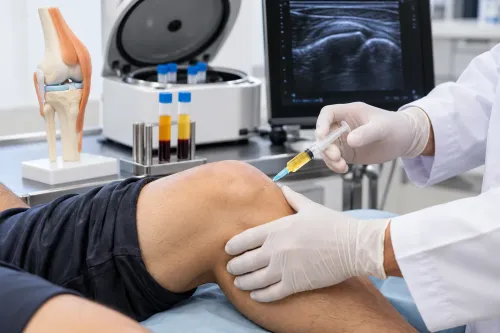
A corticosteroid injection shoulder pain treatment can improve pain and function for a limited period, but it does not repair a tendon. Discuss repeated injections carefully, especially if surgery might follow, because an injection close to surgery can raise infection risk.
Consider surgery when a traumatic tear, instability or advanced joint damage matches your weakness and disability, or when a well-delivered rehabilitation programme has failed.
What a clinical assessment checks, and when not to wait
The assessment separates pain-limited movement, stiffness, true weakness and nerve-related symptoms rather than treating every painful shoulder alike. The clinician checks posture, swelling, tenderness, shoulder-blade movement and the exact movements that reproduce symptoms.
Active and passive range of motion testing is central. You move the arm yourself, then the clinician moves it while you relax. Marked loss of both ranges, especially external rotation, points toward adhesive capsulitis; good passive movement with poor active control raises concern for rotator-cuff dysfunction or nerve weakness.
| Finding | What it suggests | Useful examination |
|---|---|---|
| Painful arc or resisted lifting | Rotator-cuff or bursal pain | Shoulder strength testing |
| Sudden inability to raise the arm | Significant tendon or nerve weakness | Strength comparison and imaging if indicated |
| Neck pain, tingling, numbness or altered reflexes | Cervical nerve involvement | Cervical spine and nerve examination |
| Unstable or slipping sensation | Instability | Directed stability manoeuvres |
Painful arc, resisted external rotation and drop-arm testing add evidence, but no single manoeuvre identifies an exact tendon lesion. Ultrasound or MRI is chosen when weakness, trauma, persistent symptoms or a concerning examination changes management; imaging is not automatically the first step.
Spine And Pain Management Centre is relevant when shoulder symptoms overlap with neck or nerve findings, because the assessment needs to examine both regions.
Seek prompt assessment for these shoulder pain red flags:
- Fever with a hot, red or visibly swollen shoulder
- New arm weakness, numbness, loss of coordination or other vascular or neurologic change
- Unexplained weight loss, cancer history or significant immune suppression
- Severe pain after trauma or a rapidly worsening loss of movement
Related service
Pain Treatment ₹700 Shoulder pain can limit daily activities such as lifting, reaching, and sleeping comfortably. At Spine and Pain Management Centre in Kalyan, Dr. View service → |
Frequently asked questions
Why does worsening shoulder pain restrict movement?
Pain can limit movement before the muscles lose all power. You may move farther by lifting slowly, supporting the elbow or resting briefly.
What can a shoulder movement pattern indicate?
Painful catching, stiffness, weakness and pain during specific movements point toward different possible causes and help guide assessment.
How can you check whether shoulder pain affects daily life?
Record your ability to reach overhead, dress, wash, lift, sleep and complete other routine tasks, noting which movements trigger pain.
When should you seek a clinical assessment for shoulder pain?
Arrange assessment when pain persists, sleep or daily tasks deteriorate, movement keeps worsening, or pain follows an injury.