Pain that travels from your back or neck into an arm or leg points to a different problem from ordinary muscle ache, and the distinction affects whether an injection is sensible. You will learn how clinicians identify a spinal nerve-root problem, when Epidural Injections fit into treatment, what results to expect, and which warning signs require urgent care.
Key takeaways
- Radiating limb pain with numbness or weakness can indicate spinal nerve-root irritation.
- Imaging and neurological tests help match the injection to the painful nerve.
- Injections can reduce pain long enough for rehabilitation, but they do not remove every cause.
- Seek urgent care after an injection for new weakness, loss of bladder control or fever.
Which symptoms suggest a spinal nerve-root problem?
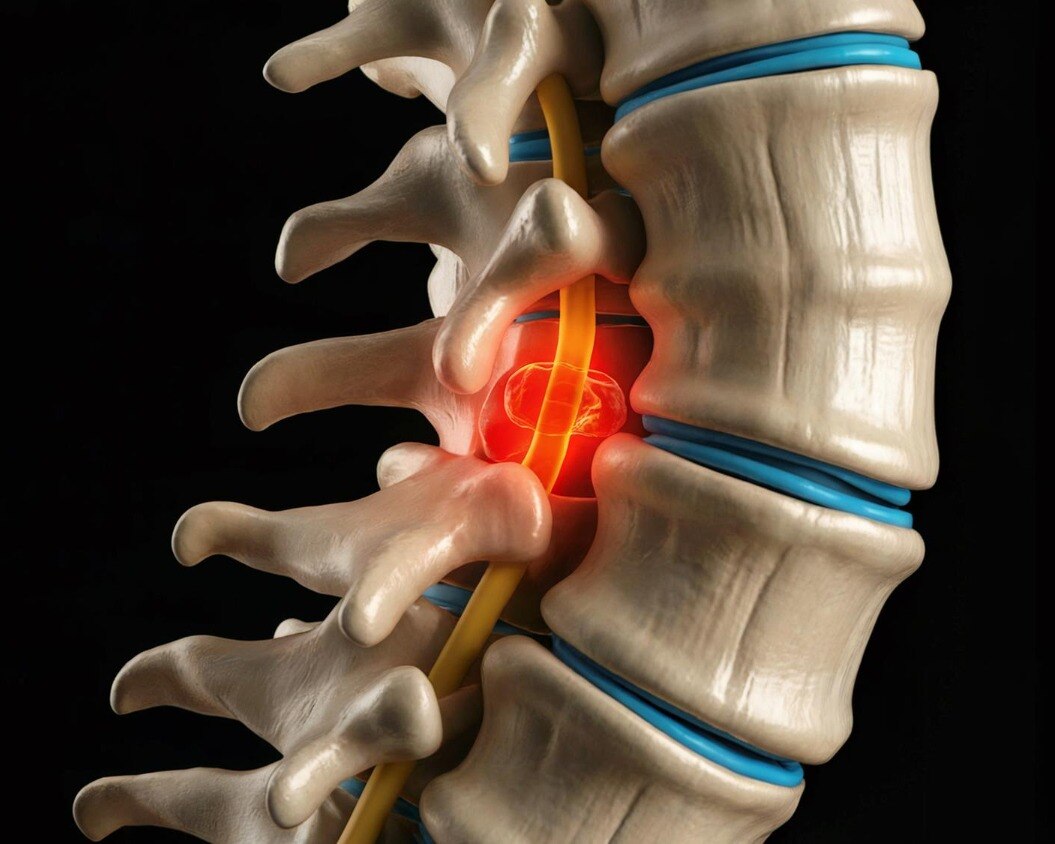
Radicular pain travels from an irritated spinal nerve root into the buttock, thigh, calf, foot, shoulder or arm. Tingling, numbness, weakness, altered reflexes and pain following a dermatomal pattern—the skin area served by one nerve root—support this diagnosis.
| Pattern | What it suggests | Typical example |
|---|---|---|
| Radicular pain | Limb pain with tingling, numbness, weakness or reflex change; often follows a dermatome | Lumbar radiculopathy from a herniated disc, or cervical radiculopathy into the arm |
| Nonspecific back or neck pain | Local aching, stiffness and muscle tenderness without neurological symptoms | Strained back muscles or isolated neck pain |
Epidural Injections are not usually a first choice for local aching, stiffness or muscle tenderness alone. An Epidural Steroid Injection places medication in the epidural space, outside the dura surrounding the spinal nerves; it does not inject the spinal cord, a muscle or a joint.
Local anaesthetic provides short-term numbing, while corticosteroid reduces inflammation around an irritated nerve root.
Seek urgent assessment instead of booking a routine injection appointment for:
- Progressive or major weakness
- Saddle numbness around the inner thighs, buttocks or genitals
- New bladder or bowel changes
- Fever or suspected spinal infection
- A history or concern for cancer
- Significant trauma
These signs can indicate cauda equina syndrome, infection, fracture or another condition requiring prompt treatment.
How do clinicians confirm the painful nerve and choose the injection approach?
Imaging cannot identify the painful nerve by itself. A clinician first matches the pain’s route—such as down one leg or into one arm—with strength, sensation and reflex findings. Weakness, reduced sensation or an altered reflex must fit the suspected nerve-root level.
The clinician then checks whether MRI or CT shows compression on the same side and at that level. A disc bulge or narrowed foramen alone does not prove the cause: these findings are common in people without pain. A mismatch between symptoms, examination and scans calls for reconsidering the diagnosis before Spinal Nerve Pain Injections.
A selective nerve-root block targets one suspected root and can provide diagnostic information if accurately placed. An Epidural Steroid Injections procedure is used mainly to reduce inflammation and pain, although the two approaches can overlap. The access route depends on symptoms, imaging and anatomy:
| Approach | Entry point | Typical purpose |
|---|---|---|
| Transforaminal | Nerve-root exit zone | Target one suspected root |
| Interlaminar | Between the laminae | Reach a broader epidural region |
| Caudal | Through the sacral hiatus | Reach lower levels when direct access is difficult or several levels are involved |
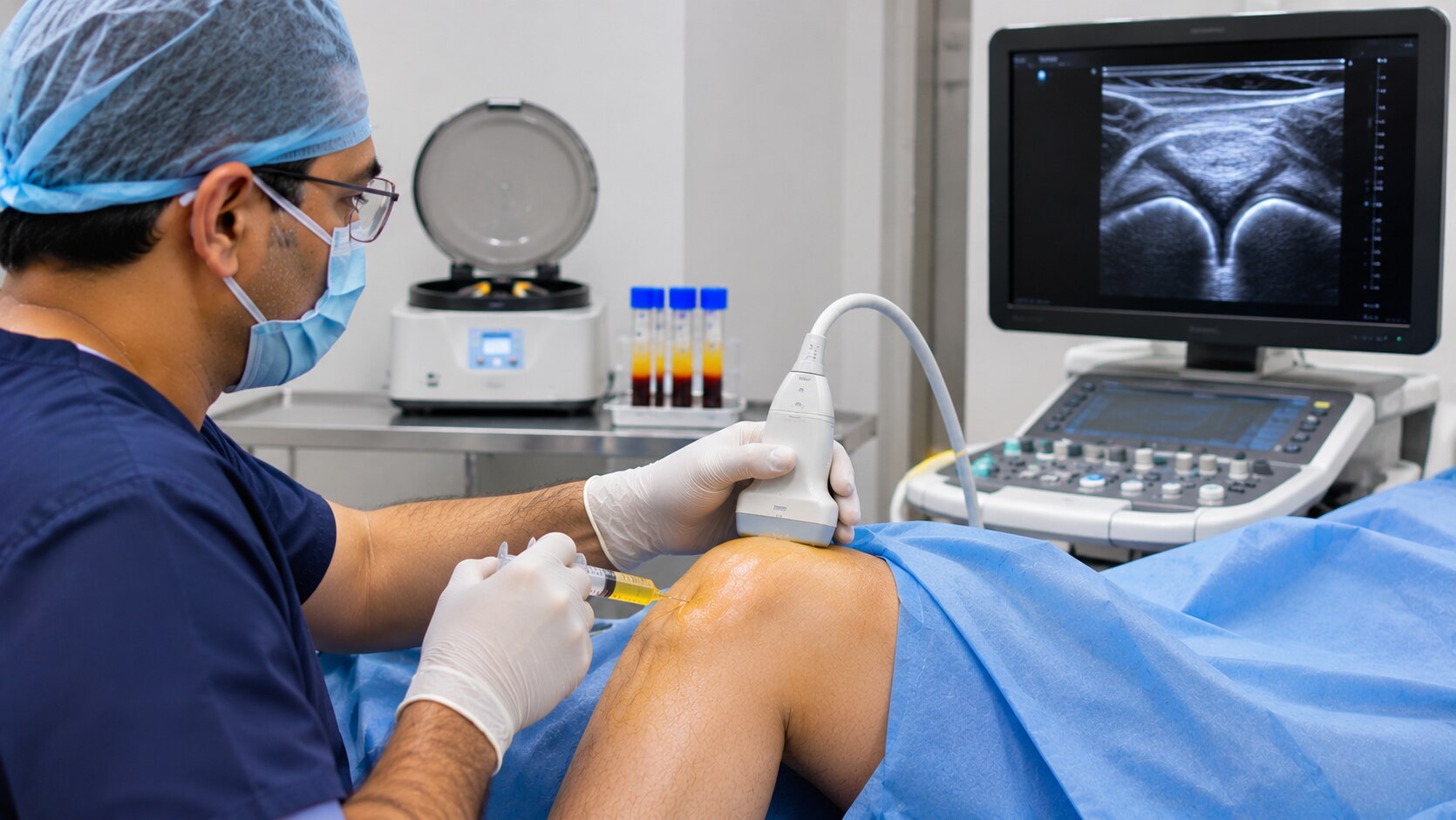
Fluoroscopy or CT with contrast is preferable to an injection without precise imaging. It confirms medication placement and helps reduce incorrect or intravascular injection. Cervical procedures need extra risk discussion because the spinal cord and nearby blood vessels leave less margin for error; steroid type, vascular avoidance and approach require careful selection.
When does an injection fit in the treatment sequence, and what can it achieve?
Epidural Pain Management fits the sequence when severe or function-limiting radicular pain has not improved after an appropriate period of activity modification, physiotherapy, time and personally prescribed medicines. Epidural Injections can create a rehabilitation window so you can walk, sleep or participate in therapy.
The injection does not remove a herniated disc, widen a permanently narrowed canal or repair a structural tear. Choose it against the diagnosis and severity of nerve compression, not pain intensity alone.
| Option | When it fits | What to expect |
|---|---|---|
| Continued medicines | Symptoms remain manageable | Avoids a procedure, but side effects or inadequate relief may persist |
| Physiotherapy | Movement is possible and rehabilitation is safe | Builds function; severe leg pain can limit participation |
| Other injections | Pain comes from a different confirmed structure | Targets another source, not an irritated nerve root |
| Surgical review | Progressive weakness or significant fixed compression | Assesses decompression when delaying treatment could cause harm |
Local anaesthetic can numb the area briefly. Steroid benefit may begin after several days, with greater relief when inflammation dominates than when fixed mechanical compression drives symptoms.
Measure success by less leg pain, longer walking, better sleep or improved therapy participation—not complete removal of back pain. Relief does not prove the structure has healed or remove the need for surgical assessment when indicated.
Repeated injections are not an automatic schedule. Discuss another injection only after meaningful, lasting previous benefit, while weighing cumulative steroid exposure, including raised blood glucose, adrenal suppression, bone effects and other systemic effects.
What happens around the procedure, and which risks need urgent attention?
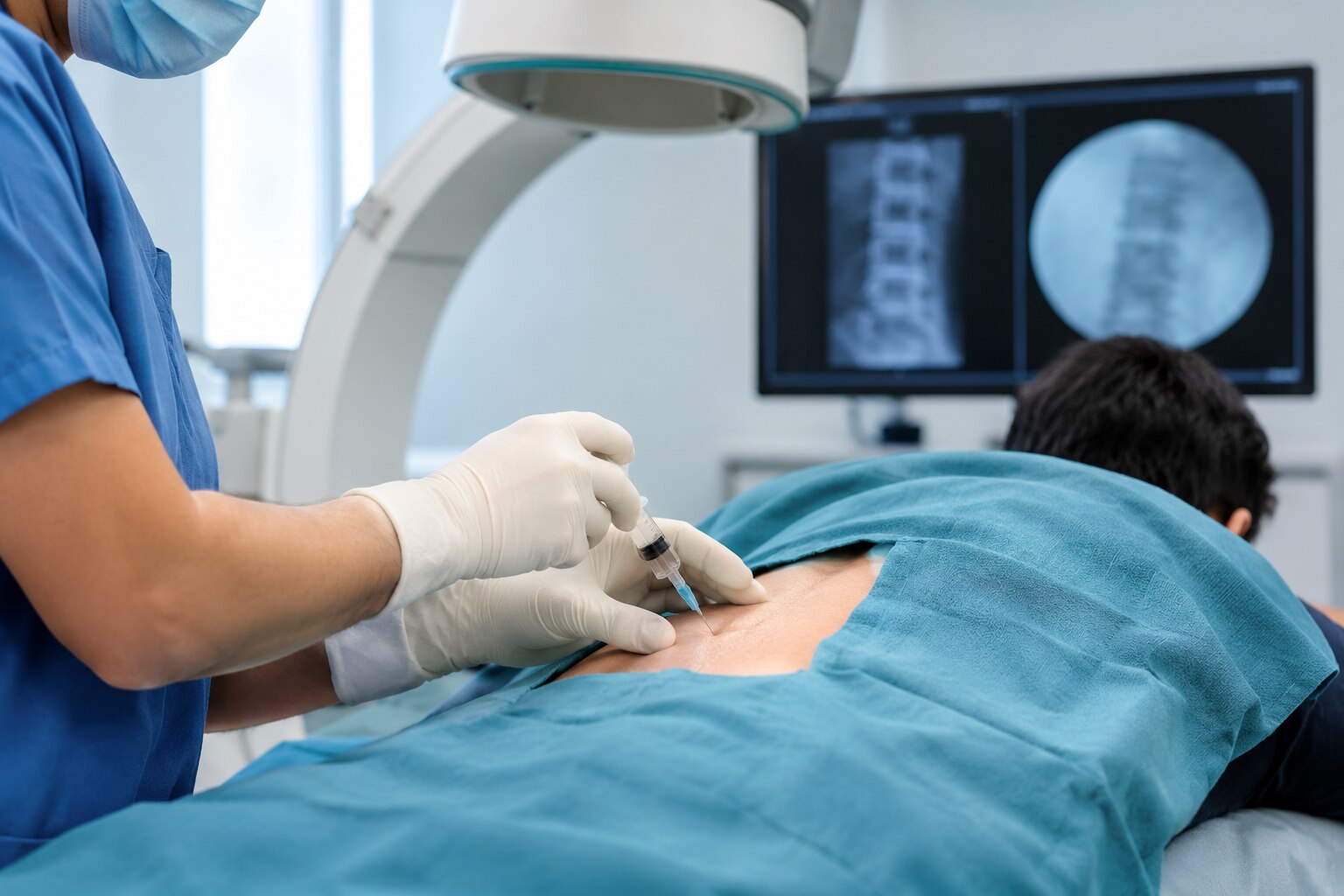
Before Epidural Steroid Injections, the clinician confirms consent, alternatives, expected benefit and specific risks. You lie face down or on your side; the skin is cleaned with antiseptic, then numbed with local anaesthetic. Fluoroscopy or CT guides the needle, and contrast confirms its position while helping detect blood-vessel entry before medication is injected.
Staff monitor your blood pressure, pulse and symptoms. Sedation is not always necessary; if you receive it, arrange an escort home and do not drive.
Prepare by asking:
- How should blood thinners or antiplatelet drugs be managed? Do not stop them yourself.
- Should diabetes medicines change, and how will raised glucose be handled?
- Report active infection, pregnancy, allergies, recent vaccines and any fasting instructions.
Expected short-lived effects include injection-site soreness, a temporary pain flare, facial flushing, insomnia, headache and elevated blood glucose. Less common complications include dural puncture causing a spinal headache, infection, bleeding or epidural haematoma, allergic reaction and nerve injury.
Some cervical transforaminal techniques carry rare, severe risks such as spinal cord or brain infarction, so discuss steroid and approach selection carefully.
| Usually settles | Needs immediate medical attention |
|---|---|
| Local soreness or brief pain flare | New weakness, saddle numbness, or bladder or bowel loss |
| Flushing, insomnia, headache or raised glucose | Fever or severe, progressive headache |
Protect the site as instructed, record pain and function, attend follow-up and complete prescribed rehabilitation. Active infection, unmanaged bleeding risk, uncontrolled diabetes or suspected urgent compression make Epidural Pain Management a poor first option.
What should you ask before agreeing to a spinal nerve pain injection?
Before agreeing to Spinal Nerve Pain Injections, make sure the proposed target, evidence, expected benefit and fallback plan are clear.
- Which nerve root is being targeted, and what diagnosis supports the injection?
- Does the MRI or CT show compression on the same side and spinal level as your symptoms?
- Which medicines, activity changes and physiotherapy have you tried, and why was Epidural Pain Management selected now?
- Will fluoroscopy or CT with contrast confirm needle placement and reduce the risk of an incorrectly placed or intravascular injection?
- What result will you measure: less leg or arm pain, longer walking, better sleep or improved function? When will you review it?
- How long is relief expected to last, and what happens if the injection fails?
| Option | What it means | When it may fit |
|---|---|---|
| Medication or physiotherapy | Continued non-invasive care | Stable symptoms without urgent weakness |
| Injection | A temporary rehabilitation window | Persistent, function-limiting nerve-root pain |
| Surgical review | Assessment of decompression | Progressive deficit or significant compression |
Also ask about travel, time away from work, transport after sedation, recovery instructions, symptom tracking and prescribed rehabilitation. These practical costs matter.
A specialist consultation at Spine And Pain Management Centre in Kalyan can connect examination, imaging and symptom pattern before selecting Epidural Injections or another treatment. The goal is a diagnosis-led plan with follow-up, not an injection treated as a standalone cure.
Related service
Pain Treatment ₹700 Dr Prakash Deshmukh at Spine and Pain Management Centre in Kalyan provides advanced Epidural Injections Treatment for effective relief from back... View service → |
Frequently asked questions
Which symptoms suggest a spinal nerve-root problem?
Pain travelling from the back or neck into an arm, buttock or leg, along with tingling, numbness, weakness, altered reflexes or a dermatomal pattern, suggests nerve-root irritation.
How do clinicians confirm the painful nerve and choose the injection approach?
Clinicians combine your symptom pattern and neurological examination with imaging such as MRI. They select the approach based on the affected level, the suspected cause and the safest route to the nerve root.
When does an epidural injection fit in the treatment sequence?
It may fit when nerve pain remains limiting after appropriate medicines, activity changes and physiotherapy, or when severe pain prevents rehabilitation. The aim is symptom relief, not a permanent cure.
What can an epidural steroid injection achieve?
An epidural steroid injection can reduce inflammation and pain around an irritated nerve, helping you move and take part in rehabilitation. Relief varies and the underlying compression can remain.
What risks after a spinal nerve pain injection need urgent attention?
Seek urgent medical care for new or worsening weakness, loss of bladder or bowel control, numbness around the genitals, fever, severe headache or rapidly increasing pain.
Keywords