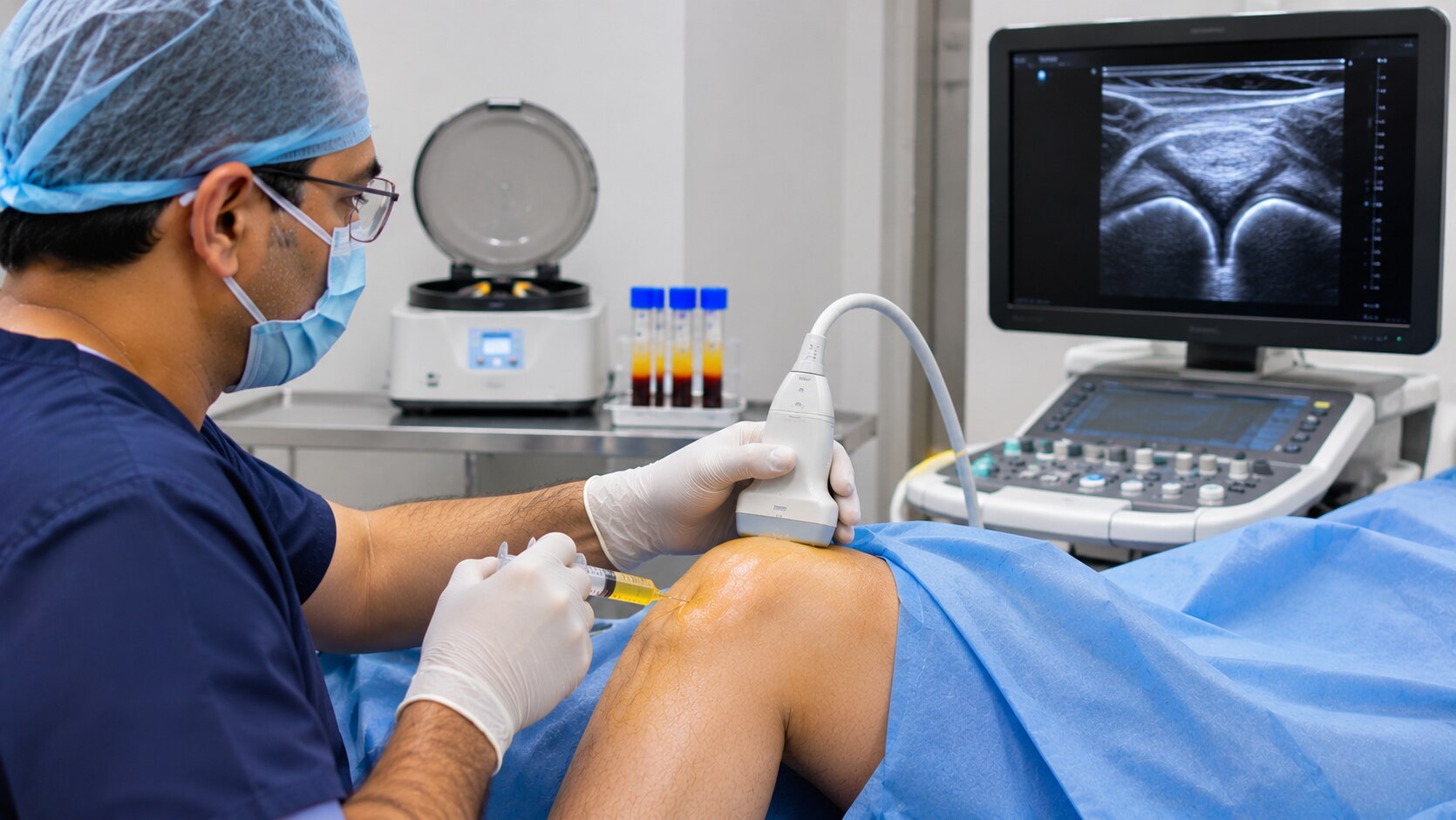
The Regenexx Protocol is not a single injection, drug, or universal stem-cell treatment. You need to know which tissue is being treated, what biological material will be used, how it will be processed and delivered, and whether the evidence and risks fit your diagnosis before comparing it with established care.
Key takeaways
- The Regenexx Protocol is customised, not one standard injection.
- Ask which biological material, dose, target, and injection route are planned.
- Request evidence for your diagnosis, including expected benefits and known risks.
- Confirm imaging guidance, clinician training, follow-up, and total number of visits.
What does the Regenexx Protocol actually include?
The Regenexx Protocol is a treatment plan, not one standard injection. The diagnosis, target tissue, imaging findings, patient factors, biological material, dose, injection route, number of visits, and follow-up determine what is done.
A single PRP injection is one procedure; regenerative medicine is the broader field covering image-guided treatments that use materials such as PRP, bone-marrow concentrate, adipose tissue, or other preparations.
| Term | What it means | What it does not tell you |
|---|---|---|
| Regenexx Protocol | A patient-specific plan for evaluation, treatment, and follow-up | That every patient receives the same injection |
| Regenexx Procedures | A brand name for procedures offered under the Regenexx system | An FDA-recognised category of medical products |
| Regenexx Orthobiologics | Branded terminology for biological materials or treatments used in that system | The material’s exact composition or clinical effectiveness |
| Regenerative medicine | The wider medical field using biological or cellular approaches | Proof that a particular treatment rebuilds cartilage, discs, or nerves |
Before consenting, request:
- The exact diagnosis and target tissue, such as a knee joint, tendon, disc, facet joint, or nerve
- The biological source, processing method, dose, and injection route
- The number of visits, expected timeline, follow-up schedule, and definition of success
- Evidence for your specific condition, including study size and follow-up duration
- Alternatives, total cost, repeat-procedure policy, and the plan if treatment fails
- Confirmation that fracture, cancer, infection, major compression, progressive weakness, and instability have been assessed before injection
Which biological material is used, and what happens during treatment?
Regenexx Procedures and Regenexx Orthobiologics are branded terms, not FDA-recognized categories of biological products. The material may be collected from your blood, bone marrow, adipose tissue, or another source, and its preparation determines what is actually delivered.
| Material | Collection and processing | Practical distinction |
|---|---|---|
| Platelet-rich plasma | Blood is drawn and centrifuged or filtered to separate plasma and platelets | Contains platelets and variable leukocytes and red cells; it is not a cell-replacement product |
| Bone-marrow aspirate or concentrate | Marrow is withdrawn, usually from the pelvic bone, then used directly or concentrated by centrifugation | Contains mixed cell populations whose counts vary with the harvest site, technique, equipment, and patient |
| Adipose tissue | Fat is removed and processed mechanically or by another permitted method | Tissue composition and cell content depend on processing; it is not interchangeable with marrow concentrate |
| Expanded cells | Cells are isolated and multiplied in a laboratory before delivery | Requires staged treatment and substantially more manipulation than same-day preparations |
| Other preparations | Products from sources such as amniotic tissue or other biologic materials follow their own processing methods | A “biologic” label does not prove that viable cells, growth factors, or FDA approval are present |
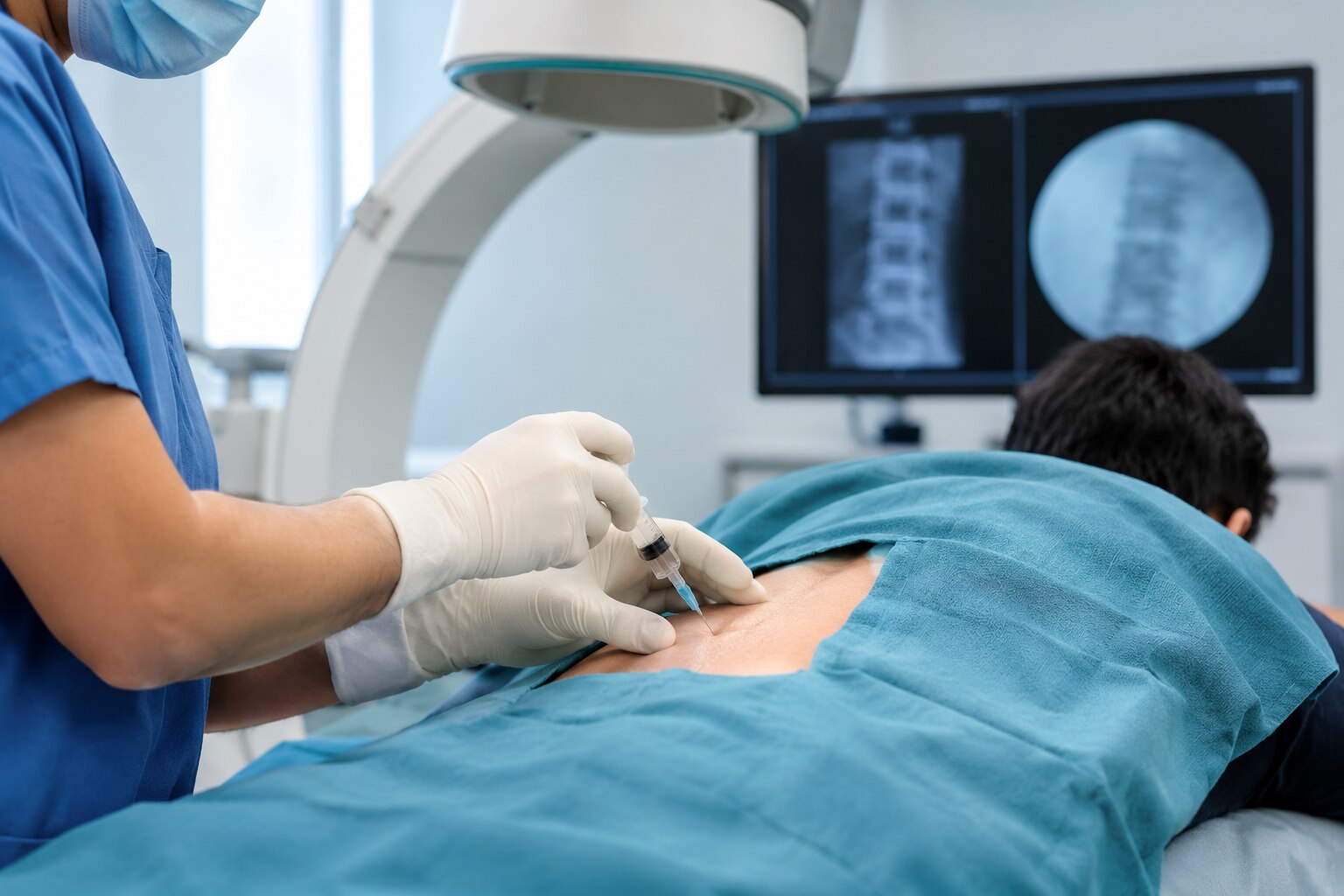
During treatment, the clinician uses sterile collection and processing equipment, then delivers the preparation through a needle to the selected joint, tendon, disc, facet, or other target, often with ultrasound, fluoroscopy, or CT. A blood-based procedure may occur in one visit; marrow-based care can be same-day or staged, while expanded-cell treatment requires later delivery.
Ask for the platelet concentration, leukocyte and red-cell content, cell count, processing equipment, sterility controls, and whether the product is manipulated or expanded.
How are the target and injection route selected?
A Regenexx Protocol selects a target from the diagnosis, not from the availability of an injection. The clinician first matches your examination findings and symptom pattern with MRI or X-ray results, then rules out fracture, cancer, infection, major compression, progressive weakness, and instability. Those problems may require urgent conventional or surgical care instead.
| Condition or structure | Why the target differs | Typical image-guided route |
|---|---|---|
| Knee osteoarthritis | Pain, restricted movement, and X-ray or MRI changes must identify the symptomatic joint rather than a tendon or nerve. | Ultrasound or fluoroscopy into the knee joint |
| Hip pain | Hip-joint disease must be separated from lumbar or tendon pain; the deep joint is harder to reach accurately. | Ultrasound or fluoroscopy into the hip |
| Shoulder tendon disease | A tendon or partial tear needs treatment around the tendon, not inside the joint; excessive needle trauma matters. | Ultrasound around the affected tendon |
| Ligament injury | The injured ligament’s attachment and continuity determine the target. | Ultrasound or fluoroscopy near the ligament |
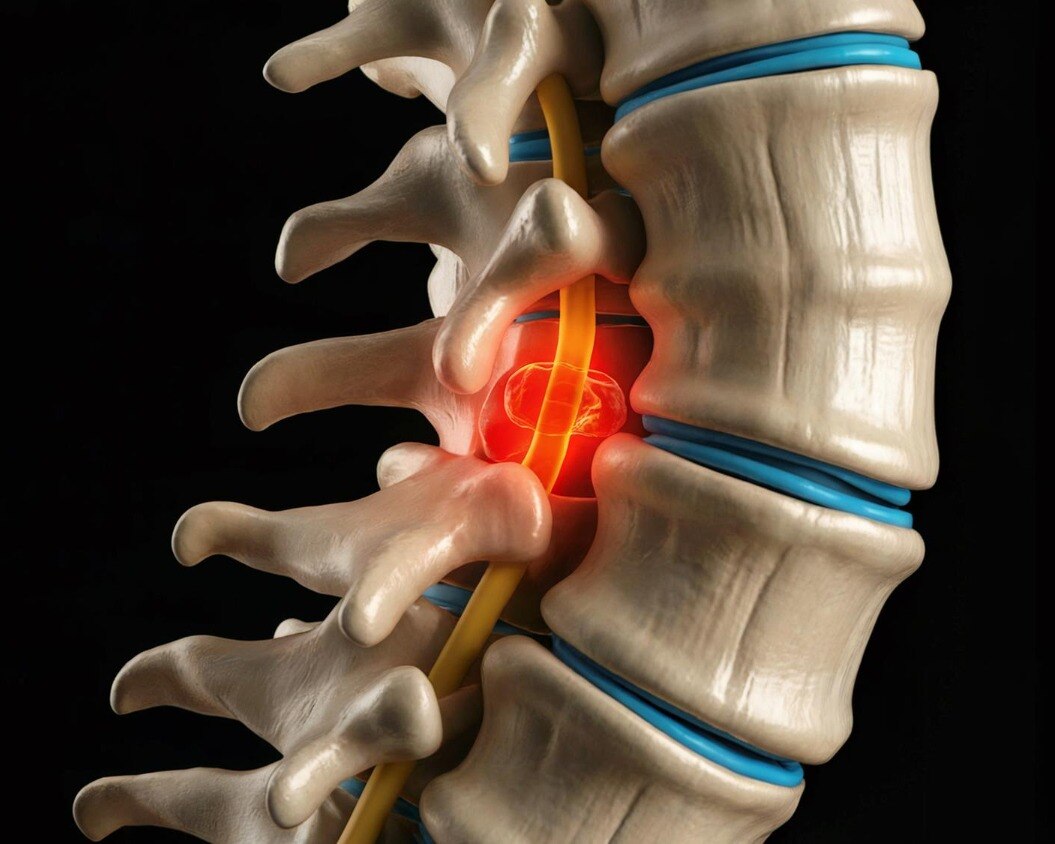
| Disc-related pain | Disc findings must match the pain pattern because an MRI abnormality alone does not prove the disc is causal. | Fluoroscopy or CT into the disc |
| Facet-mediated pain | Local back pain and examination findings must correspond to a specific facet joint. | Fluoroscopy with contrast into the facet |
| Sacroiliac pain | Provocation tests and symptom location must support the sacroiliac joint rather than the hip or lumbar spine. | Fluoroscopy or CT into the joint |
| Nerve-related pain | Weakness, sensory change, and compression location determine whether a nerve is appropriate for injection or needs decompression. | Ultrasound, fluoroscopy, or CT along the planned route |
These Image Guided Regenerative Procedures verify needle position and contrast spread; they do not prove tissue repair. A clinician should explain the exact target, route, and safer alternative before proceeding.
What benefits, evidence limits, and risks should you weigh?
A proposed orthobiologic procedure may reduce pain or improve function, but it should not be sold as proven cartilage, disc, or nerve regeneration. Knee cell-based studies show uneven results: some report symptom improvement, while structural repair has not been demonstrated consistently.
Evidence for intradiscal injections is less mature. Studies often involve small samples, inconsistent platelet or cell products, different MRI criteria, and limited long-term follow-up, so results cannot reliably identify who benefits or compare Regenexx Procedures with other Image Guided Regenerative Procedures.
Compare the proposal with established options:
| Option | Potential role | Important trade-off |
|---|---|---|
| Orthobiologic procedure | Possible pain or function benefit | Uncertain product-specific and long-term evidence |
| Rehabilitation and exercise | Builds strength, movement, and tolerance | Requires sustained participation |
| Weight reduction for knee osteoarthritis | Reduces load on the joint | Helps only when excess weight contributes |
| Medication or standard image-guided injection | Symptom control | Relief may be temporary; side effects vary |
| Radiofrequency treatment | Selected facet-mediated pain | Does not treat every spine pain source |
| Surgery | Decompression, stabilisation, or joint replacement when indicated | Greater recovery demands and operative risks |
Autologous material is not risk-free. Discuss post-injection pain, bleeding, infection, inflammatory flare, failed improvement, donor-site pain, and injury to nearby structures. Spine procedures add discitis, dural puncture, nerve injury, and possible neurologic or vascular complications.
In the United States, “regenerative,” “stem-cell,” and “orthobiologic” marketing does not establish FDA approval or effectiveness. Ask what is approved for your condition, what remains experimental, and what happens if symptoms worsen.
What should you ask before choosing a Regenexx procedure?
A useful consultation ends with written answers, not a promise that the Regenexx Protocol will rebuild cartilage, discs, or nerves. Compare Spine And Pain Management Centre with any provider using this checklist:
| Question | What to request | Warning sign |
|---|---|---|
| Exact diagnosis and target | The named condition, tissue, and injection site | “Joint pain” without a confirmed target |
| Material and processing | Source, dose, platelet or cell content, handling, and whether expanded | “Stem cells” with no product details |
| Imaging and visits | Ultrasound, fluoroscopy, or CT; number of visits and expected timeline | One standard injection for every condition |
| Success and evidence | A measurable outcome, review date, and studies for your specific joint or spine diagnosis | Evidence from a different disease |
| Cost and repeats | Total fee, follow-up charges, and the repeat-procedure policy | Pressure to prepay for multiple procedures |
| Alternatives and safety | Rehabilitation, weight reduction, medication, standard injections, radiofrequency treatment, or surgery when indicated | No discussion of conventional care |
| Infection control and failure plan | Sterile preparation, skin antisepsis, warning instructions, and the next step if symptoms worsen or treatment fails | “Autologous means risk-free” |
Ask how Regenexx Orthobiologics fits the proposed Image Guided Regenerative Procedures plan, and what regulatory status and uncertainty apply. Informed consent should explain when conventional or surgical care is safer, including fracture, cancer, infection, major compression, progressive weakness, or instability.
After a spine procedure, seek urgent assessment for fever, chills, severe new pain, progressive weakness, or bowel and bladder changes. Do not assume these signs are a normal flare.
Related service
Pain Treatment PRP — Regenexx Protocol Treatment ₹700 Dr Prakash Deshmukh at Spine and Pain Management Centre in Kalyan provides advanced PRP — Regenexx Protocol Treatment, a non-surgical regenerative... View service → |
Frequently asked questions
What does the Regenexx Protocol include?
It can include a diagnosis, imaging review, biological material, dose, injection route, number of visits, and follow-up plan tailored to the patient.
Which biological material is used during Regenexx Procedures?
The material depends on the treatment plan and target. Ask the provider to name it, explain how it is prepared, and state the planned dose.
How is the injection target selected?
The target is selected using the diagnosis, symptoms, physical findings, and imaging. The clinician should explain why that tissue and injection route fit your condition.
What benefits and risks should you weigh?
Discuss the evidence for your diagnosis, realistic benefits, treatment risks, alternatives, recovery demands, and what happens if symptoms do not improve.
What should you ask before choosing a Regenexx procedure?
Ask about the material, dose, imaging guidance, clinician qualifications, total visits, follow-up, expected costs, alternatives, and diagnosis-specific evidence.
Keywords