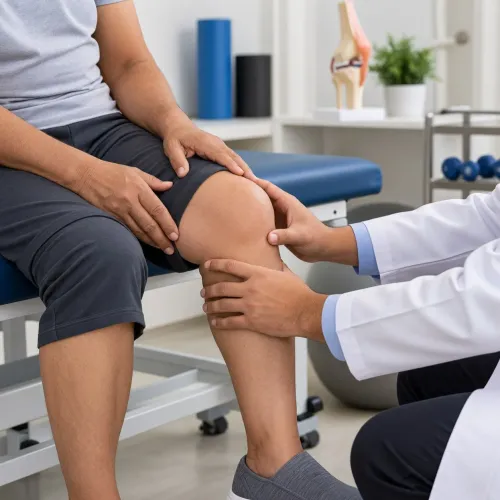
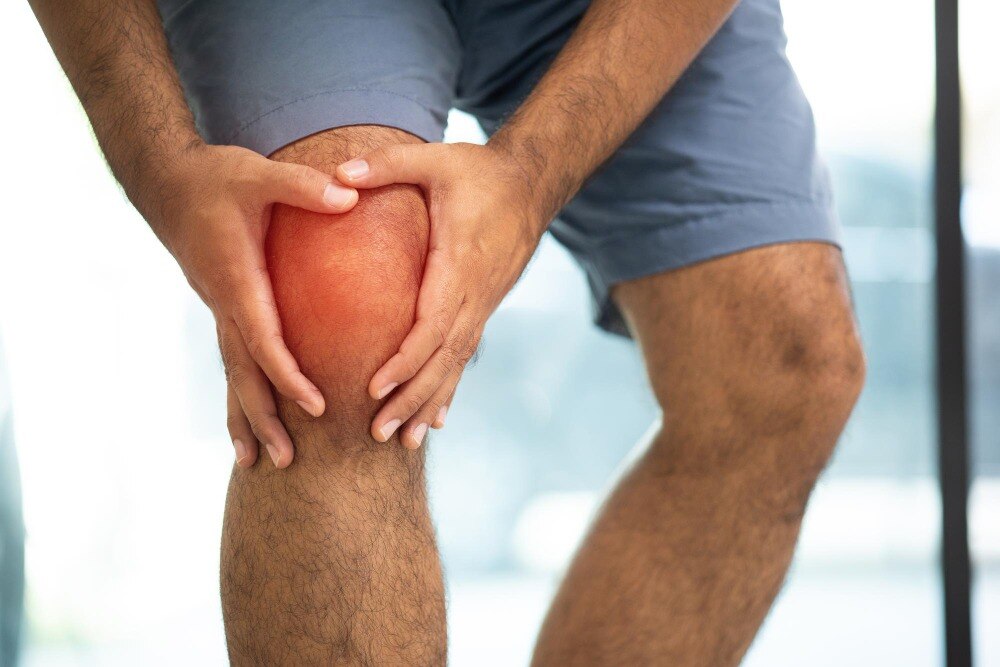
Pain that appears during walking or on the stairs can come from the kneecap, joint surfaces, tendons, bursae, ligaments, meniscus, hip or lower back. By tracking where the pain occurs, when it starts and which movements trigger it, you can understand the likely possibilities and recognise when an examination is needed.
Key takeaways
- Stair pain often points to the kneecap joint, not automatically arthritis.
- Pain location, timing and swelling help narrow the likely knee problem.
- Hip, lower-back or nerve problems can feel like knee pain.
- A knee pain assessment combines symptoms, examination and targeted imaging.
Which knee problems cause pain while walking?
Walking-related Knee Pain has several Knee Pain Causes, and weight-bearing alone cannot identify one. Osteoarthritis often produces loading pain and stiffness after sitting or resting, but patellofemoral pain commonly affects the front of the knee and follows a sudden increase in walking, running, squatting or stair use.
That is load intolerance, not proof the joint is “worn out.”
| Problem | Clues that make it more likely | What can trigger it |
|---|---|---|
| Osteoarthritis | Loading pain, stiffness after inactivity, brief morning stiffness | Walking or prolonged standing |
| Patellofemoral pain | Pain at the front of the knee | Stairs, squatting, running or prolonged sitting |
| Meniscus injury | Inner or outer joint-line pain, swelling, catching or locking | A twist, fall or forceful turn |
| Ligament injury | Swelling, instability or difficulty bearing weight | A sudden twist, fall or impact |
| Quadriceps or patellar tendon problem | Focused tenderness above or below the kneecap | Added stairs, running, jumping or repeated squats |
| Bursitis | Tenderness over a pressure-sensitive area outside the joint | Kneeling, direct pressure or repetitive activity |
Pain after a recent twist, fall or sharp increase in activity makes an injury more plausible, especially when swelling, catching or giving way follows. A tendon or bursa problem usually feels local and tender to touch, while pain only during walking can also come from referred hip or nerve-related problems.
Examination, not the symptom alone, separates these causes.
Why do stairs hurt more than level walking?
Stairs increase knee load because the quadriceps must produce more force while the knee is bent. That raises pressure through the patellofemoral joint, so pain at the front of the knee during stairs, squatting, running or prolonged sitting fits patellofemoral pain, but does not prove it.
| Direction | What the knee must do | What pain may indicate |
|---|---|---|
| Going up | The quadriceps generate force to lift your body | Patellofemoral load intolerance, reduced quadriceps or hip-muscle capacity, or tendon overload |
| Going down | The quadriceps brake your body’s descent | Poor strength, patellofemoral pain or knee osteoarthritis |
| Either direction | Repeated bending and weight-bearing | A sudden activity increase, tendon irritation or other Knee Pain Causes |
Weakness or poor capacity in the quadriceps, hip muscles and other lower-limb muscles can alter kneecap tracking and load distribution. Pain above the kneecap can involve the quadriceps tendon; pain below it can involve the patellar tendon, especially after adding stairs, hill walking, running or repeated squats.
The ascent-versus-descent pattern guides examination rather than providing a self-diagnosis. A clinician may assess strength, hip control, kneecap movement, joint tenderness and, when indicated, imaging.
Do not repeatedly push through sharp or escalating pain. Reduce the provoking load, then progress strengthening as symptoms settle; that approach differs from prolonged rest, which can further reduce capacity.
What do pain location, timing and knee symptoms reveal?
Knee Pain location, timing and associated symptoms narrow the possibilities, but no single pattern proves a diagnosis. The first steps after sitting or resting can reflect stiffness; pain only after prolonged walking points more toward load intolerance than one specific disease.
Front-of-knee pain fits patellofemoral tissues, while pain above or below the kneecap raises tendon or nearby soft-tissue possibilities.
- Inner joint-line pain may involve the meniscus or collateral ligament; tenderness just below and inside the joint may involve the pes anserine region.
- Outer joint-line pain may involve the collateral ligament or iliotibial band.
- Pain behind the knee requires consideration of posterior joint structures, hamstring or calf tissues, and other causes.
- Swelling after a twist or fall raises concern for injury; persistent effusion broadens the differential.
- Warmth, reduced range of motion, grinding, catching, giving way, and true locking each add different clues. Locking means the knee cannot fully bend or straighten.
- A twist, fall, or sudden increase in walking, running, squatting, or stair use supplies important timing information.
Morning stiffness lasting more than about 30 minutes, marked swelling, or rapidly worsening symptoms does not fit routine osteoarthritis neatly. Arrange a broader Knee Pain Assessment, especially when fever or feeling unwell accompanies the symptoms.
Could the pain be coming from your hip, back or a nerve?
A painful knee is not always the structure causing the pain. Hip disease can refer pain to the knee even when your hip does not hurt, so restricted or painful hip movement matters during a Knee Pain Assessment.
| Source | Clues that change the assessment |
|---|---|
| Hip | Knee pain with reduced hip rotation or painful hip movement, even without reported hip pain |
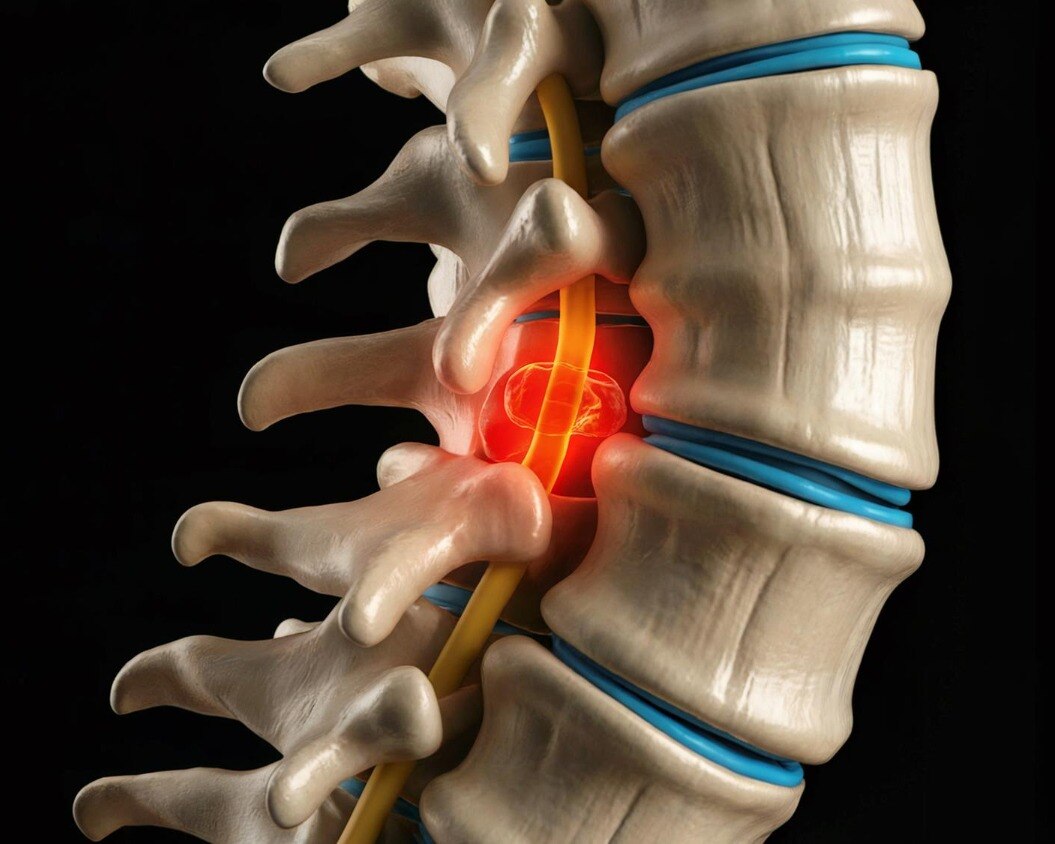
| Lumbar nerve root | Pain travelling toward the knee or lower leg with numbness, tingling, burning or weakness |
| Pes anserine region | Tenderness on the inner side of the knee, below the joint line |
| Collateral ligament | Inner or outer knee pain after a force, twist or impact |
| Iliotibial band or nearby tendon | Localised outer-knee or above/below-kneecap pain linked to repeated activity |
Nerve-related pain usually has a spreading, burning or electric quality, while isolated joint-line pain stays more local. Pain outside the joint can also come from the pes anserine region, collateral ligaments, iliotibial band or quadriceps and patellar tendons.
Seek prompt medical assessment for an acutely hot, swollen and very painful knee, especially with fever or feeling unwell. Sudden inability to bear weight, a deformed knee or a genuinely locked knee can indicate infection, major injury or another urgent problem.
A proper examination compares both legs, watches you walk, and checks alignment, knee movement, hip and spine movement, stability and relevant nerve findings. Examining only the tender spot can miss the actual pain source.
How is the cause confirmed before choosing knee joint pain treatment?
An MRI report is not a diagnosis. The cause is confirmed by matching your symptom pattern with the examination and, when needed, imaging.
A practical Knee Pain Assessment records:
- When pain began and whether a twist, fall, or activity increase triggered it
- Exact location, walking tolerance, stair difficulty, swelling, catching, locking, or giving way
- Previous injury, recent activity changes, fever, and infection or cancer risk
The examination compares both legs and checks gait, alignment, range of motion, joint fluid, focal tenderness, ligament stability, meniscal signs, hip movement, and neurological findings.
| Test | What it helps assess | Important limitation |
|---|---|---|
| Weight-bearing X-rays | Joint-space narrowing, alignment, and bone changes in chronic pain | They do not show every meniscus, tendon, or ligament problem |
| MRI | A suspected internal derangement when X-rays do not explain persistent symptoms | It can reveal age-related meniscal changes that are not causing pain |
| Meniscal MRI finding | A possible structural clue | Without true mechanical locking, it may be incidental, especially with osteoarthritis |
A painful knee does not automatically need MRI. Taking painkillers without checking stomach, kidney, blood-pressure, pregnancy, and medication risks creates avoidable harm. Treating the scan instead of the person does too.
Knee Joint Pain treatment may involve graded strengthening, aerobic or functional exercise, weight management with exercise for osteoarthritis, suitable topical anti-inflammatory medicine, or selected injections. Do not stop all activity; reduce the provoking load and rebuild capacity. Spine And Pain Management Centre can help in Kalyan when walking pain persists or the diagnosis remains unclear.
Related service
Pain Treatment ₹700 Knee pain can affect mobility, daily activities, and overall quality of life. At Spine and Pain Management Centre in Kalyan, Dr. View service → |
Frequently asked questions
Which knee problems cause pain while walking?
Osteoarthritis, patellofemoral pain, meniscus injuries, ligament injuries and tendon problems can all cause walking-related knee pain. Pain timing, swelling and movement triggers help distinguish them.
Why do stairs hurt more than level walking?
Stairs increase the load through the knee, especially the kneecap joint. Pain while climbing often fits patellofemoral pain, while pain descending can also reflect reduced knee control or arthritis.
What do pain location, timing and knee symptoms reveal?
Front-of-knee pain linked to stairs or squatting suggests patellofemoral pain. Inner or outer joint-line pain can involve a meniscus. Stiffness, locking, giving way and swelling provide additional clues.
Could the pain be coming from my hip, back or a nerve?
Yes. Hip disorders, lower-back problems and irritated nerves can refer pain to the knee. Numbness, tingling, burning pain or back and hip symptoms make referred pain more likely.
How is the cause confirmed before choosing knee joint pain treatment?
A clinician reviews your history, checks walking and knee movement, examines nearby joints and tests strength and nerves. X-rays, ultrasound or MRI are chosen when the examination indicates they are needed.
Keywords