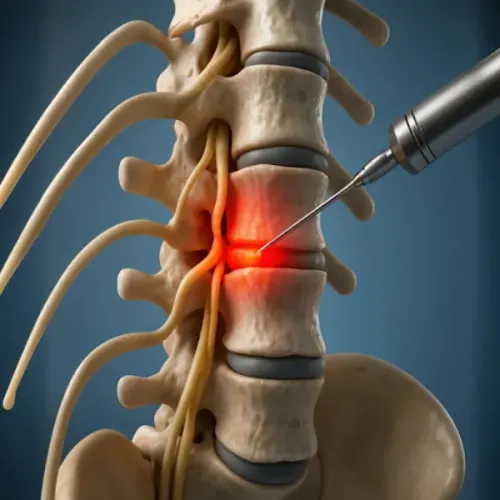

Persistent pain travelling from the spine into an arm or leg can significantly affect mobility, sleep, work, and daily routines. When symptoms are linked to irritation around a spinal nerve, Epidural Injections Treatment may be considered for selected patients after clinical assessment.
For individuals in Dombivli, Maharashtra, understanding where epidural treatment fits within the wider care pathway can help avoid two common assumptions — that every patient with radiating pain needs an injection, or that an injection automatically solves the underlying spinal condition.
What Epidural Injections Treatment Is Designed to Address
The epidural space surrounds spinal nerve structures. In selected conditions, medication may be delivered into this area to address inflammation and pain associated with irritated nerves.
Patients being evaluated may have symptoms such as:
- Radiating leg pain
- Sciatic-type symptoms
- Arm pain related to cervical nerve irritation
- Tingling
- Burning pain
- Numbness
- Pain aggravated by certain movements or positions
The treatment decision depends on the diagnosis rather than pain intensity alone.
How Epidural Treatment Differs From General Pain Medication
Oral medication circulates through the body, while an epidural procedure delivers medication to a targeted anatomical region.
That does not mean targeted treatment is automatically the better choice for every patient. Mild or improving symptoms may respond to conservative care, while persistent nerve-related symptoms may justify consideration of additional options.
The purpose of evaluation is to identify which approach matches the clinical situation.
What Should Happen Before an Epidural Injection
A procedure should follow assessment rather than replace it.
Before recommending an injection, the clinician may review:
- The distribution of pain
- Neurological symptoms
- Duration of the problem
- Previous treatments
- Physical examination findings
- Relevant imaging
- Medical conditions and medications
- Whether symptoms and imaging findings correspond
This is particularly important because abnormalities seen on MRI scans are not always the source of pain.
What Patients Should Expect From Epidural Injections Treatment
The response to an epidural injection varies. Some patients may experience meaningful improvement, while others may have limited benefit.
The procedure should therefore be discussed in terms of realistic objectives rather than guaranteed outcomes.
Pain reduction may sometimes help a patient participate more comfortably in rehabilitation and everyday activity. The broader management plan may still involve exercise, movement guidance, and treatment of contributing factors.
Questions to Ask Before Proceeding
Useful questions include:
- What is the diagnosis causing my nerve pain?
- Which spinal level is being targeted?
- Why is an epidural appropriate in my case?
- What alternatives are available?
- What are the potential risks?
- What should I do after the procedure?
- How will my response be assessed?
A clear discussion is a valuable readiness indicator before any interventional treatment.
Spine and Pain Management Centre provides assessment for interventional pain procedures when they are clinically appropriate. The decision is based on the symptom pattern, examination, imaging, and previous treatment response.
For patients in Dombivli, Maharashtra, Epidural Injections Treatment should be considered as one possible component of a structured pain-management plan. The strongest treatment decisions begin with identifying the nerve-related problem and establishing why a targeted intervention is appropriate for that individual.
Keywords